1st Temple: Senso-ji

Lee

Even if you’re not on pilgrimage, Senso-ji is an appropriate place to begin a visit to Tokyo. It’s the city’s oldest temple, dating back before the city existed, almost 1400 years to 645 AD. It’s doubtful that anything but the Sumida River remains from that time, aside from the statue of Kannon that the original temple was built to house. The brothers Hinokuma Hamanari and Hinokuma Takenari were fishing on the Sumida and caught the statue in their nets on the morning of March 18th, 628. As they were eating their breakfast, they couldn’t have imagined the city that would grow around the statue they were about to find; they couldn’t imagine us imagining them on that sunny morning.
DSCN0627.JPG

The statue that remains as evidence of their presence on the Sumida River that day must be imagined. Shokai Shonin, the Priest who built the original temple, had a dream warning him that no one should see the statue and it was not seen again for over a thousand years until, during the Meiji period, suspicious government officials came to verify its existence. The officials opened the altar and made sketches of the statue while the monks averted their eyes. The Bodhisattva has not been seen since, but we trust s/he is there, hidden, surrounded by the city s/he founded and the hundreds of millions of lives s/he holds in her heart. A good metaphor for faith.

DSCN0629

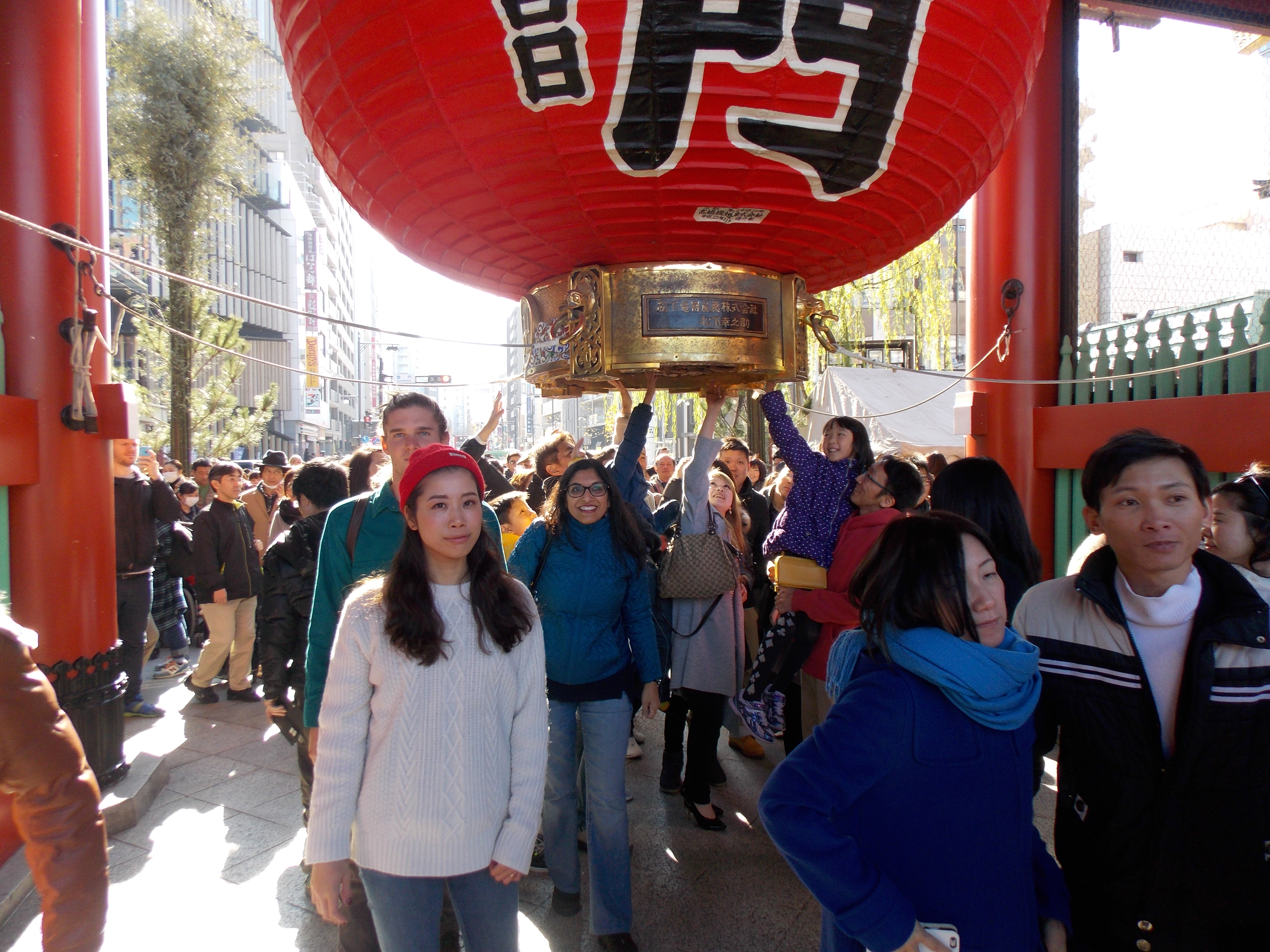
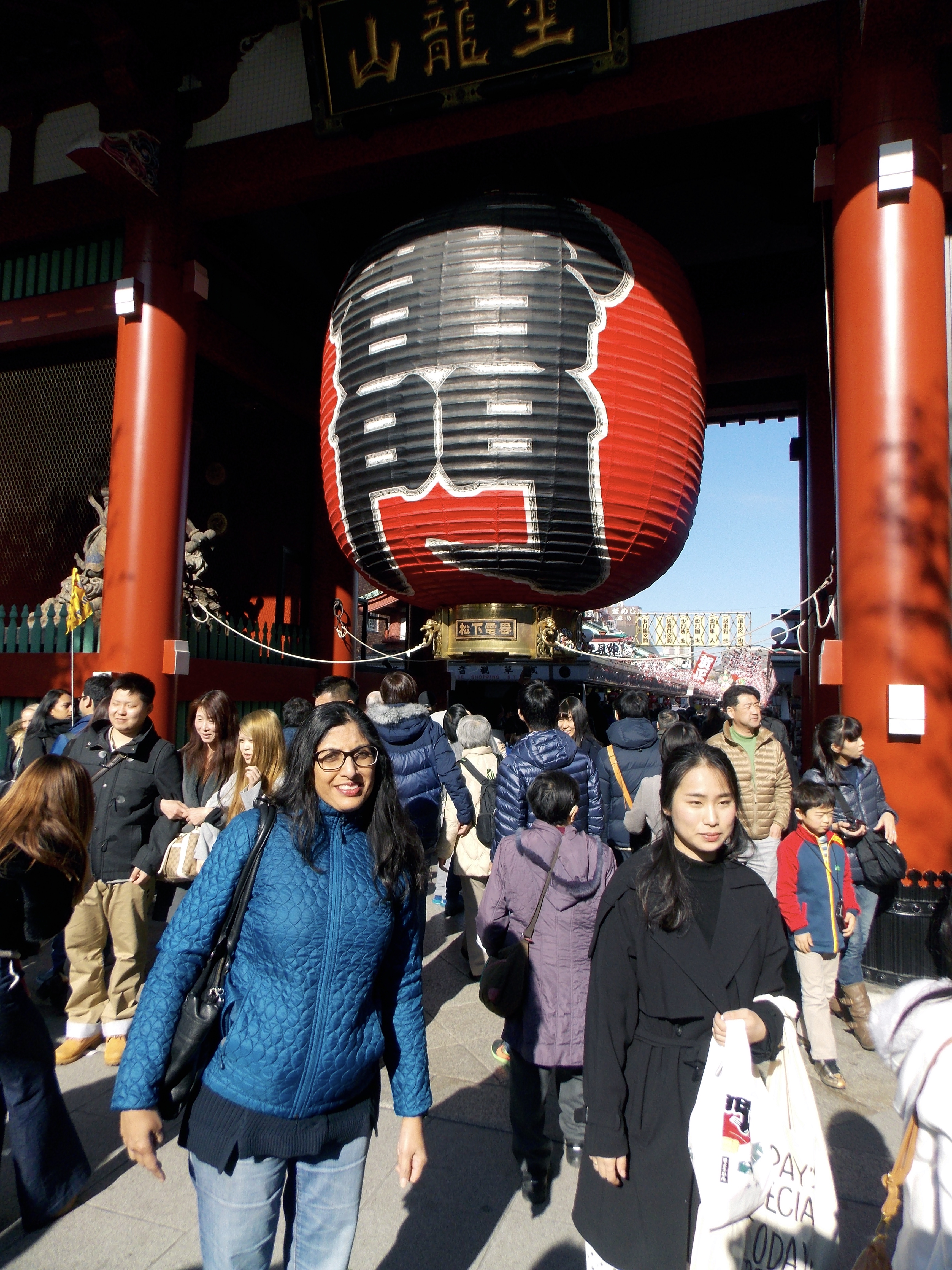
The trains aren’t crowded on this 30th of December, and when we exit the subway we have no trouble finding the temple: signs everywhere point the way. By the time we reach the enormous red-and-black Japanese lantern of Kaminarimon, “The Thunder Gate”, we are submerged in a sea of humanity. On any given day Senso-ji is a popular spot, attracting 30 million visitors each year, but today is only one day before New Year’s Eve. Coming as I do from a farm in Saskatchewan I feel as though I’m surrounded by all 30 million. At least I’m taller than average, whereas Ranjini sinks into the crowd. Nervous that I’ll lose her, I grasp her hand and we follow the procession through The Kaminarimon Gate, imitating the others who reach up and touch the dragon carving fitted into its base. I suspect we’re doing this for luck.
DSCN0626 (1).jpg

Once through, we swim with the crowd up Nakamise-dori, slowly approaching the temple. This narrow street, lined on both sides with a multitude of stalls selling food, crafts, kimonos and t-shirts, cheap and expensive souvenirs, makes me realize that pilgrimage is about more than faith. It’s about separating the pilgrims from their money. I don’t voice this to Ranjini, knowing she won’t appreciate the cynicism of this sentiment, but it is undeniable that the economy created by the pilgrimage is, perhaps, as important in understanding it as faith. Money may not make the world go round, but it does make people gather, and it creates cities and civilizations. All that is made manifest in the crowd pressing against us as we edge our way toward the Hozomon Gate.
DSCN0631.JPG

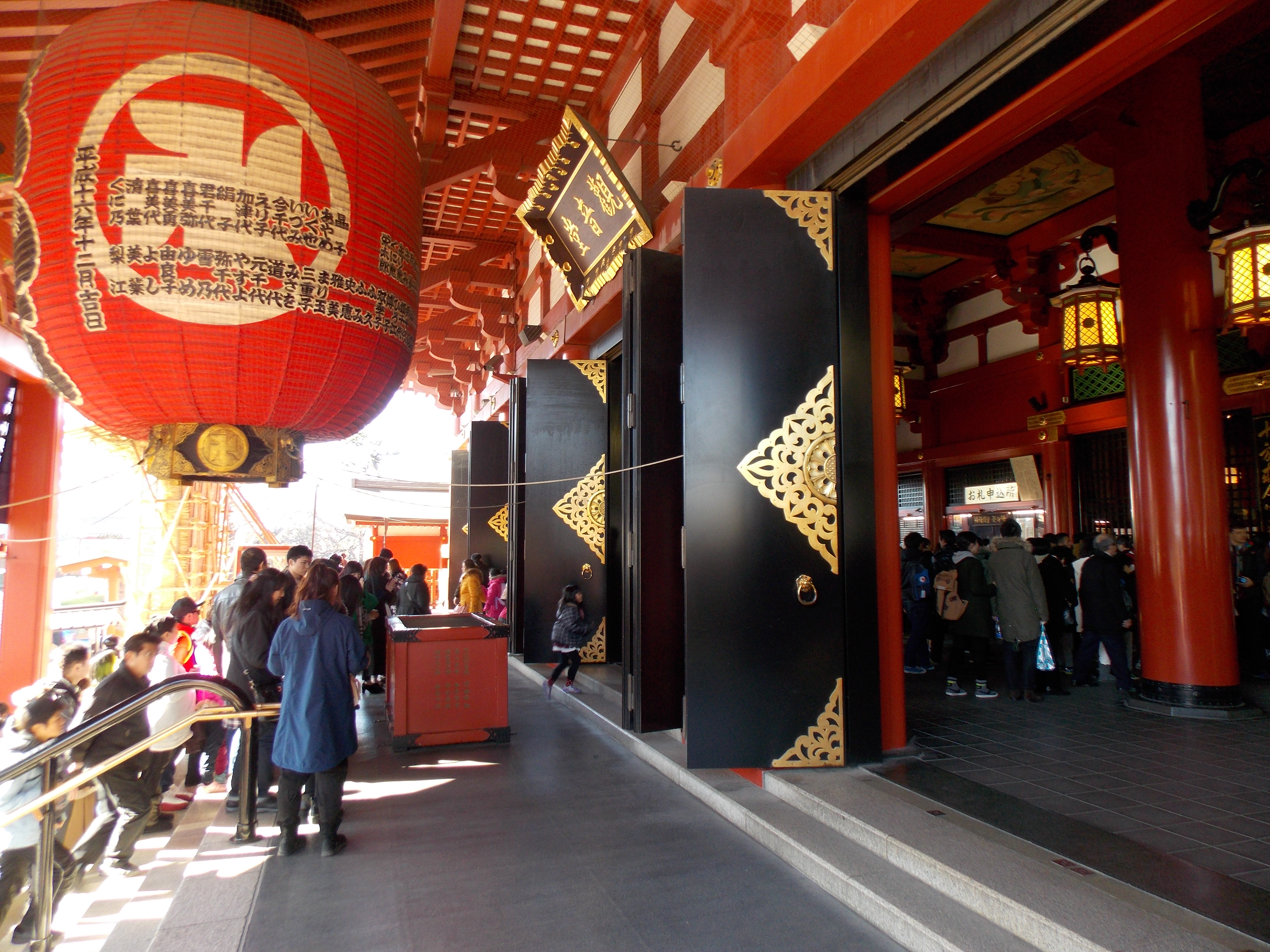
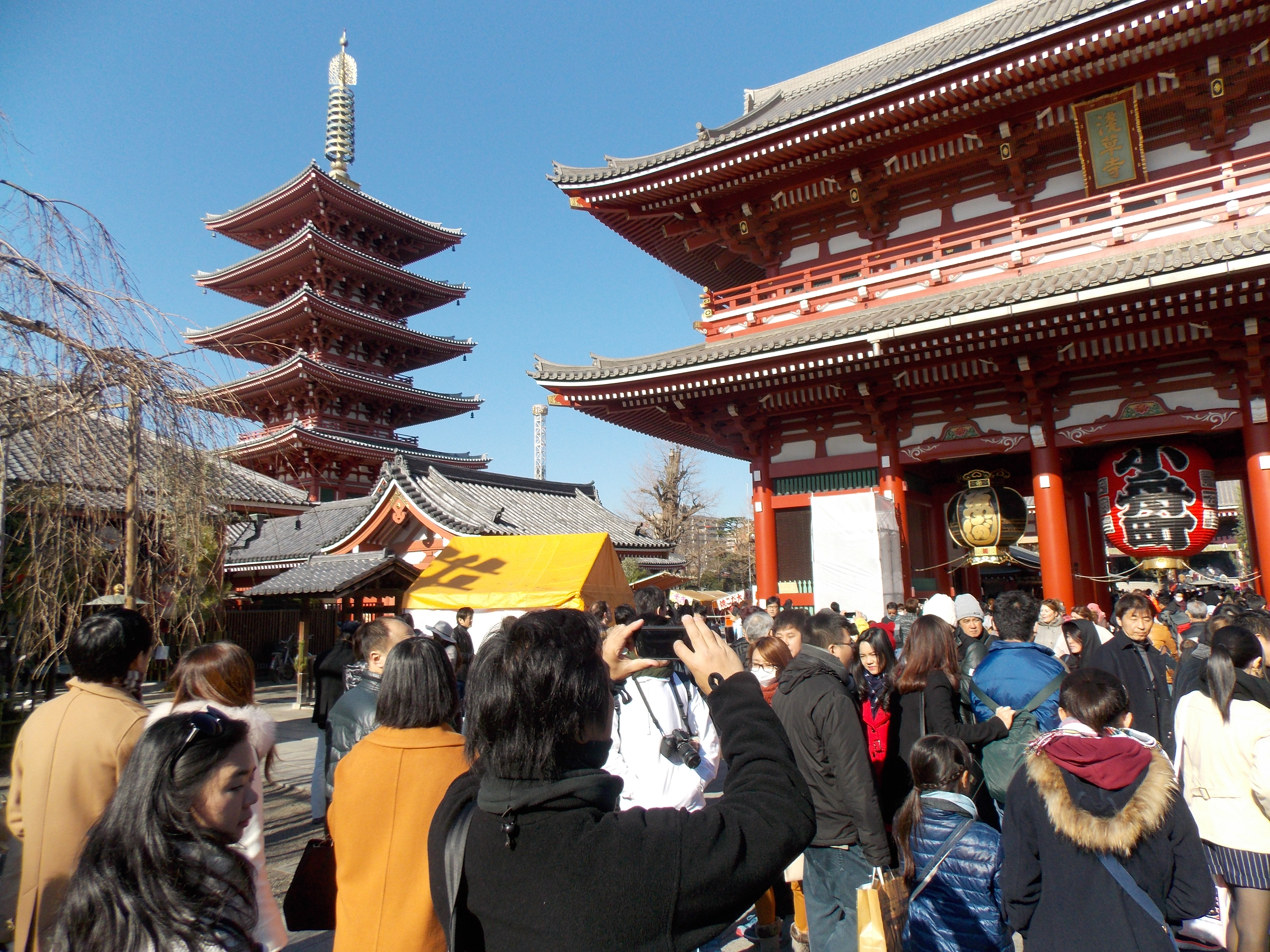
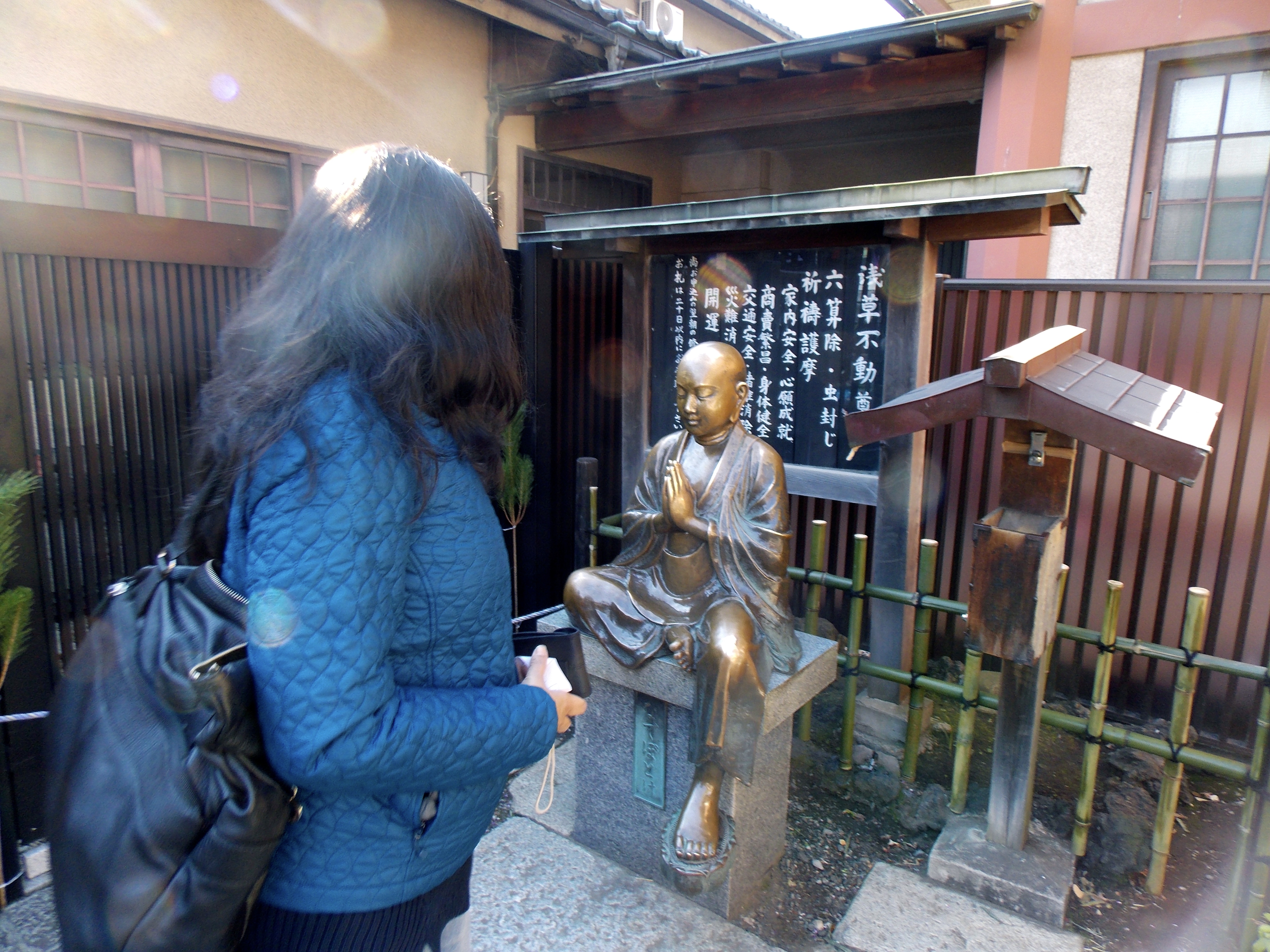
Hozomon means “Treasure House” and this gate marks the boundary between the profane world of commerce and the actual temple grounds. Two Nio statues guard the gate, and the 2nd floor of the treasure house contains ancient copies of the lotus sutra and the Issai-kyo, an ancient manuscript of Buddha’s teachings. We stop at a stall near the Hozomon Gate, where a nun sells incense for 100 Yen, and ask where to buy our go-shuin book. These are used to record the visit to each temple: a monk or lay-worker stamps a page and adds beautiful calligraphy that contains a mantra, the date, and the temple’s name. The nun draws a map and Ranjini buys and lights some incense, leaving it as an offering in the huge metal incense burner. She flutters her hands like birds to direct the smoke over her body and bows to the beautiful young Buddha.
DSCN0639.jpg

Ranjini

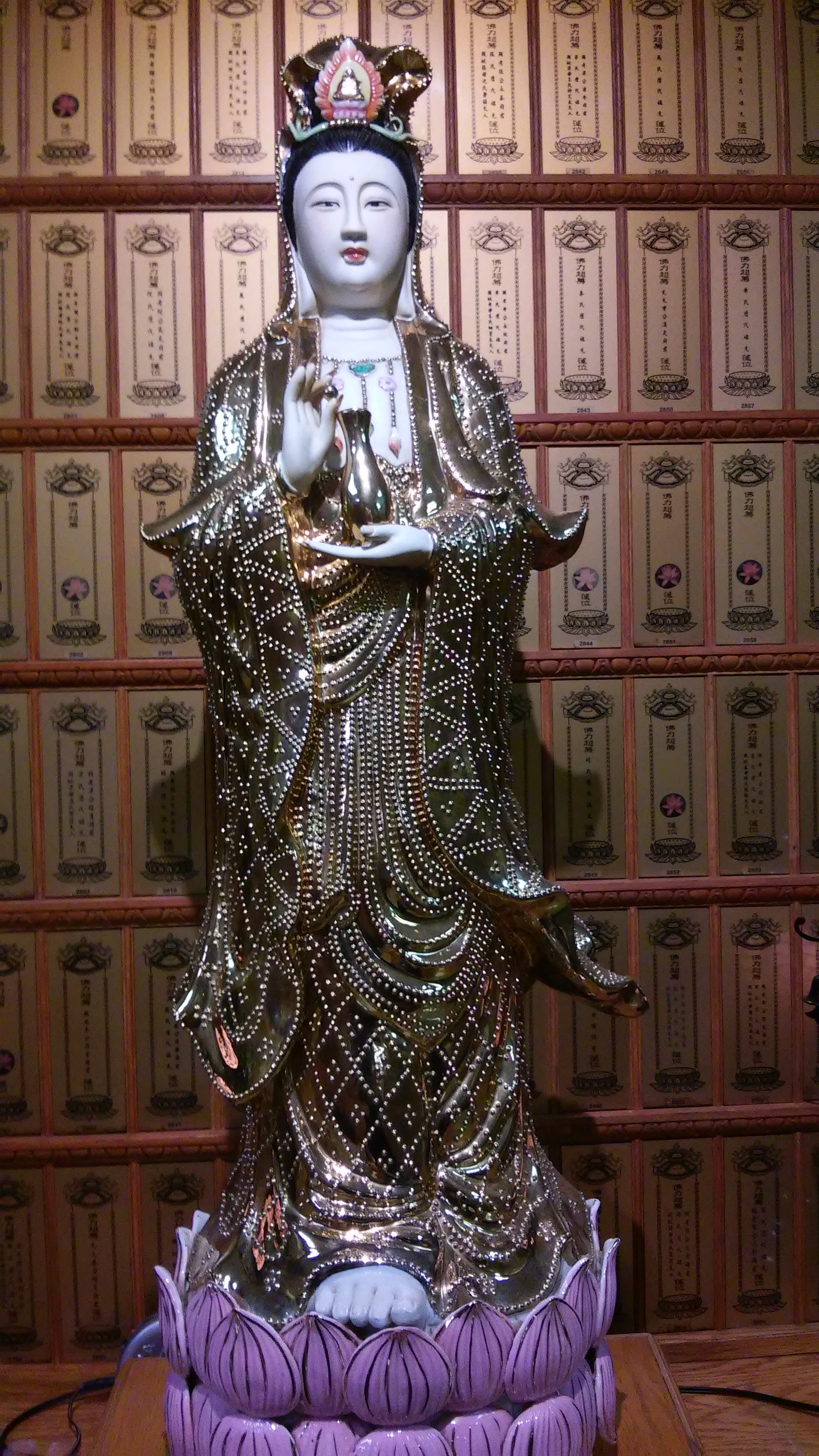
After Marie introduced me to Kuan Yin, I was confused by my overwhelming devotion to an unknown goddess.  One night after I prayed to Kannon—“Am I on the right path?”—I dreamed of her.

She stood before me. “Hello, I’m Kuan Yin.”

She was in her thirties, medium-height, beautiful, slender, dressed in gray robes, her black hair coiled in a topknot.

“You must be very busy,” I said.

She smiled at my words. “Yes,” she said, before taking off, one leg gracefully folded like an Indian goddess, flying like a dakini into the air.
20170824_181002.jpg

I am used to crowds but I sense Lee’s difficulty as we press forward to the ancient temple of Senso-ji.   Since that dream encounter, I have been on pilgrimage.  Yet, this is my first formalized pilgrimage with 33-stops and a go-shuin book. In the souvenir stalls, there are no postcards of the ancient (and hidden) Kannon statue that we have come to visit; there is not even a replica of her in the main shrine room.
DSCN0666.JPG

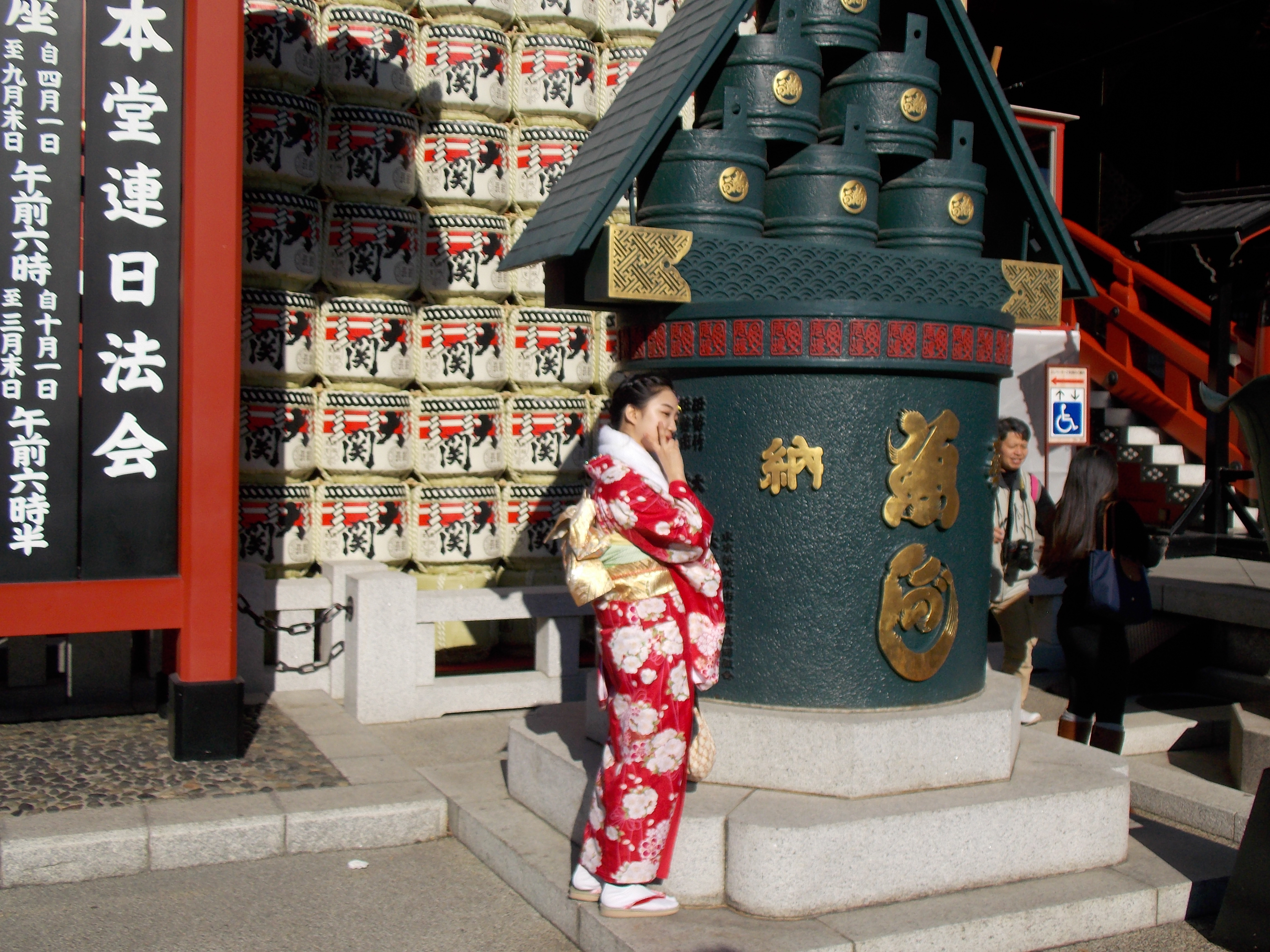
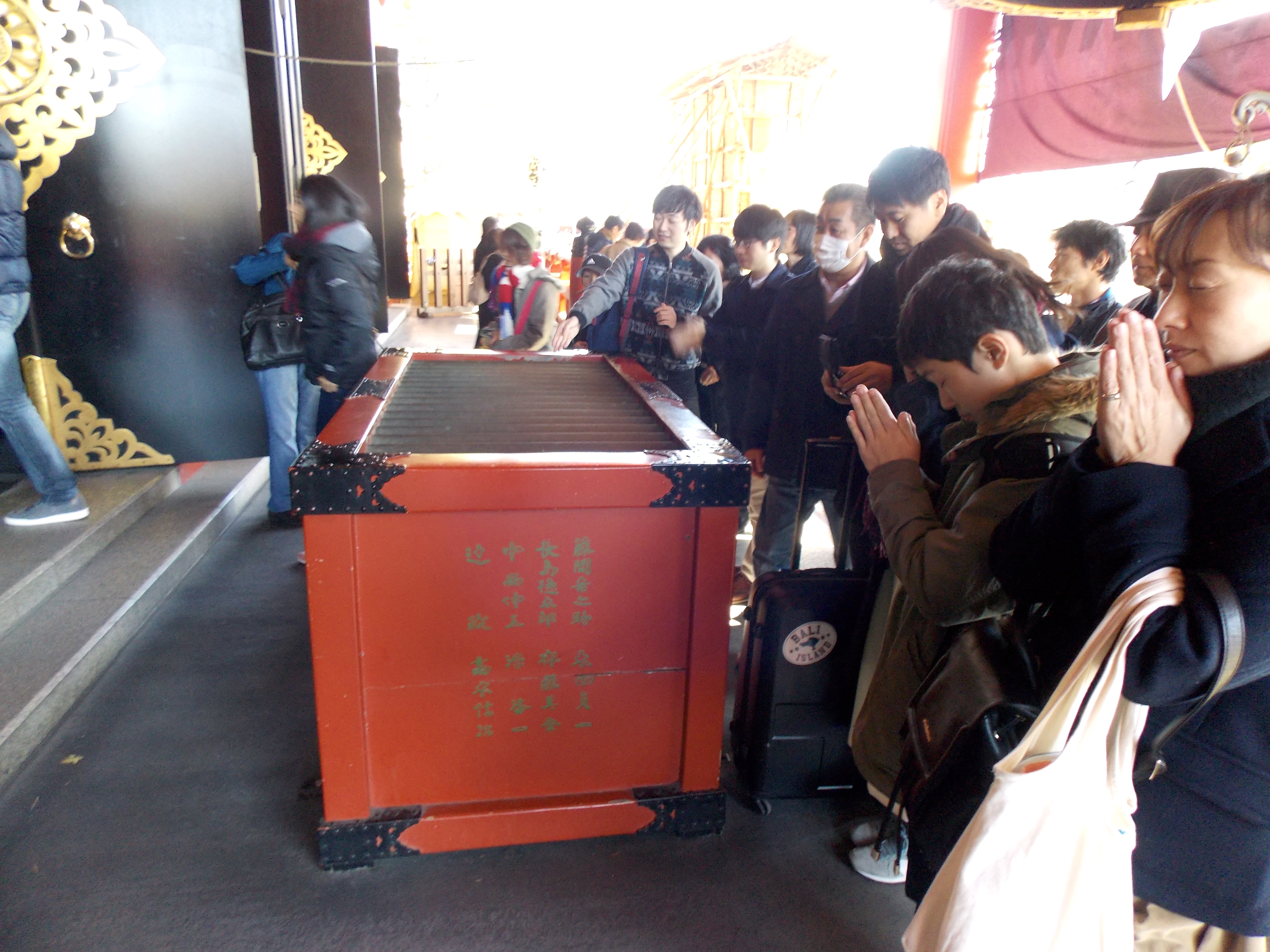
In the foyer outside the main shrine, we bow to the deities through the glass and light candles and buy good luck charms. I slip off my shoes and attempt to gain entrance into the main hall but a monk politely gestures me out.

There seems to be no way to meet Kannon.

I know that she is here, infinite, vast, limitless, endlessly compassionate, and it is silly this yearning to touch, to take home, or at the least, to see.
DSCN0655.jpg

At Sensoji, I shake the cylindrical container. Simultaneously, thousands of pilgrims address the goddess. Yes, Kannon is very busy.

Oracle number 18, Good Fortune.

The linen robe turns into a green one. What you’ve been troubled for a long time will soon begin to fade away. Your virtue and happiness will reveal themselves. Your wishes will be realized. Building a new house and removal are good.  Marriage and employment are all good. 

Outside, white slips of oracles flutter on innumerable stands. In Japanese temples, everything seems left behind, candles and wooden plaques with inscribed prayers.  Yet, I tuck my oracle into my purse.

As we prepare to leave Senso-ji, I return to the incense burner where smoke rises in thick clouds, and direct the smoke to my heart for healing and purification.

Let go.

I tie my good oracle to the stand.

It is only later that I am told that good oracles are kept, and the bad ones left behind for Kannon’s mitigation.

Lee, my Love. Kanzeon Bosatsu. This now is blessed and joyous.  

Sakura Gardens

Lee

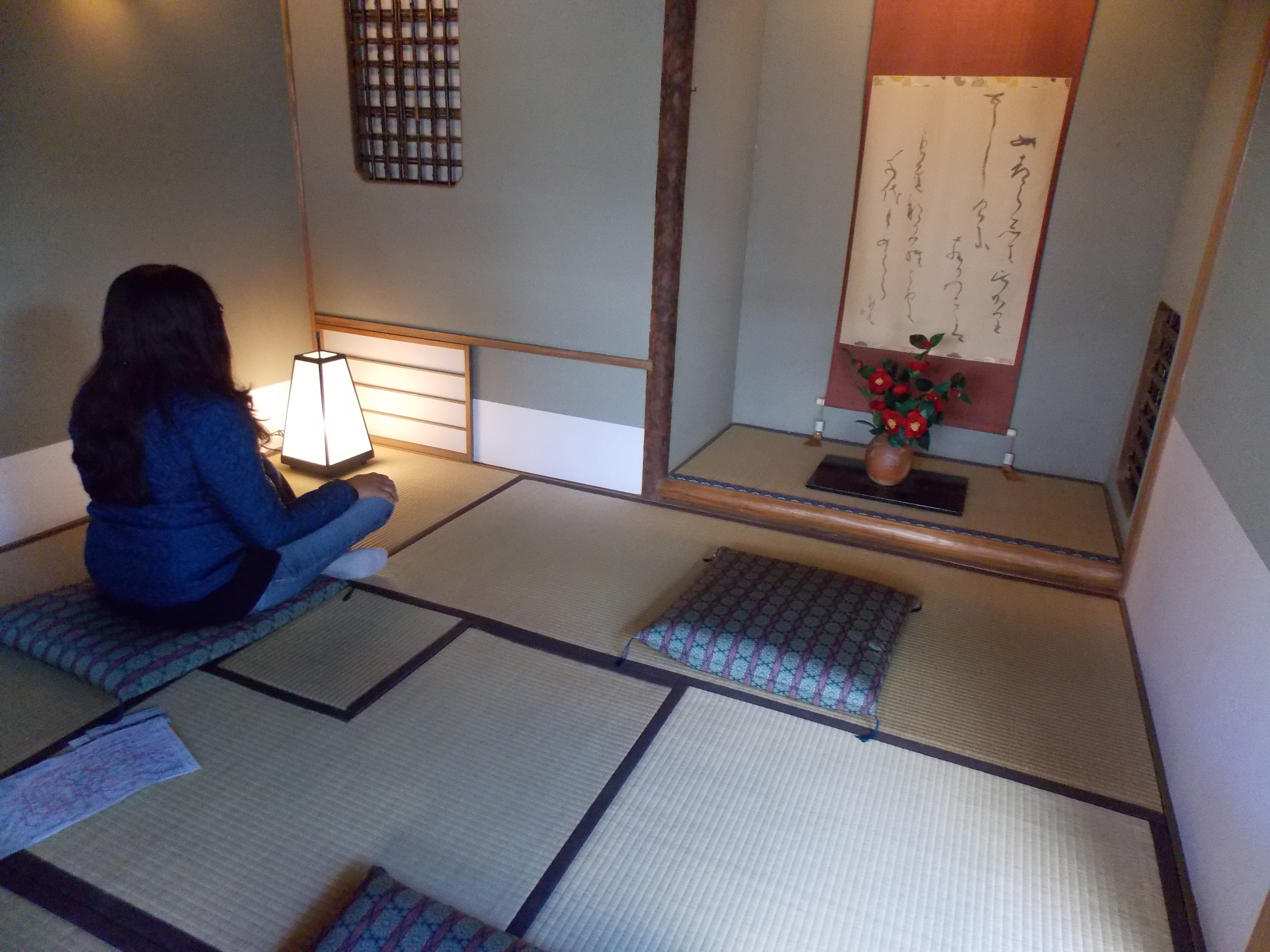
There are no cherry blossoms at this time of year, but the late morning is a pleasant 10 degrees Celsius, and the garden is large and green and lovely. There is a meditation room with tatami mats and a small shrine, so we slip off our shoes and sit a while listening to the birds singing the dharma and the distant hum of traffic, my brain floating off in all directions with the giddiness of the time-change and the dislocation of being in this beautiful and unfamiliar place.

DSCN0555 (1)

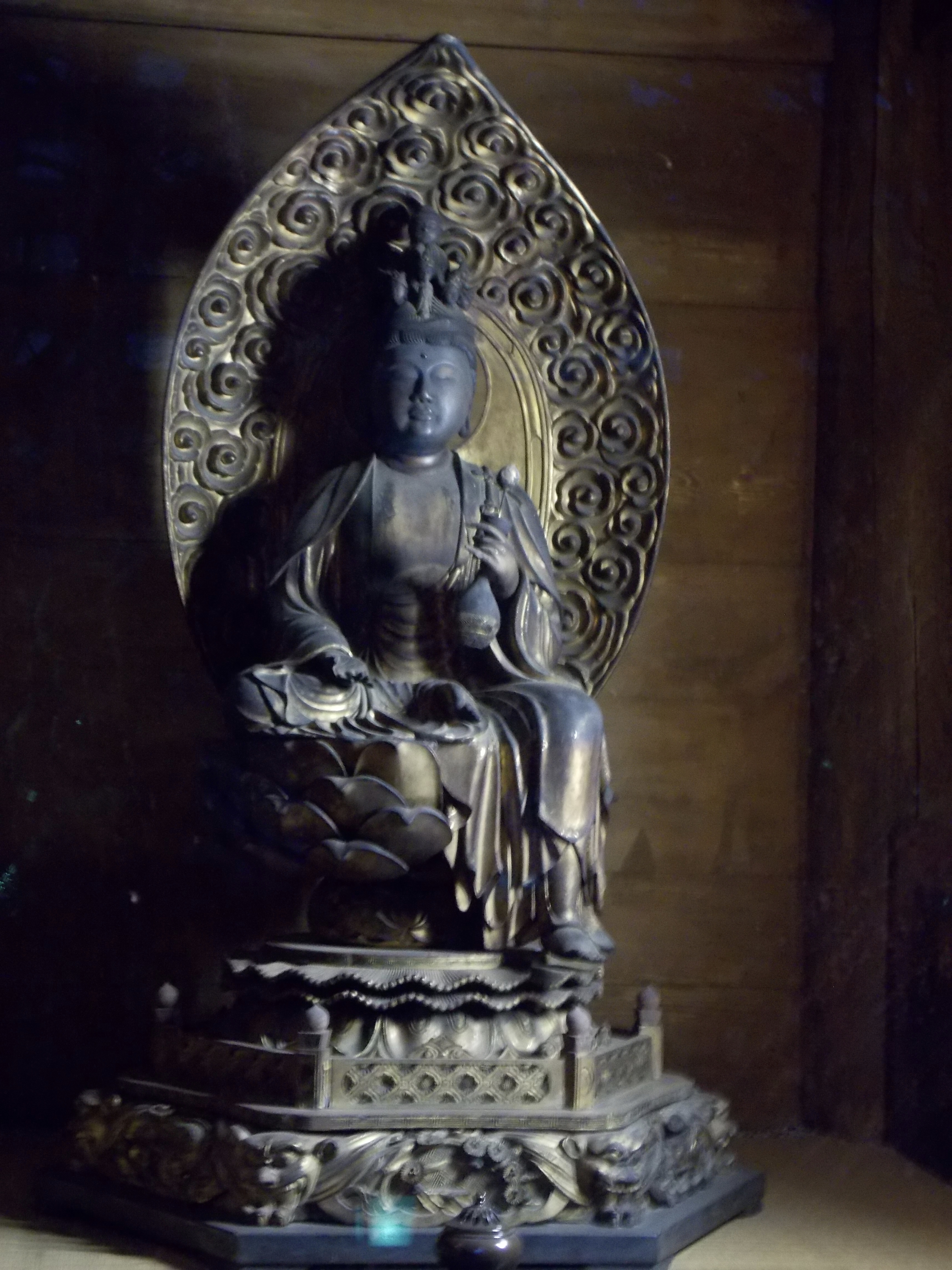
When we continue down the path we come to a small shrine. Peering through the glass we see her: Amida Buddha rests in her crown, a vial containing her tears clutched to her heart with her left hand, and her right hand open in her lap to accept our offering.

DSCN0563 (1).JPG

We have come upon Kannon, the goddess of compassion, by chance in this sakura garden in Tokyo. Last night Ranjini reminded me that she was to be an important part of our trip. We were to visit some of 33 temples dedicated to her on a pilgrimage that would lead us all over Tokyo. Ranjini had a book to guide us.

DSCN0592 (1).jpg

I agreed. It sounded like a fun way to explore the city. We’d see how many we could do in our week in Tokyo.

After our walk through the garden, we go for a brunch of noodles and when we finish I think we should go back to the Hotel to check on our luggage. When we do, the jetlag hits me and I lie down for a rest. By the time I realize Ranjini isn’t pleased it’s too late. She’d hoped we might visit the first temple on our pilgrimage.

I promise we’ll do one tomorrow.

DSCN0581.jpg

Ranjini

In the morning we go down to the lobby and in the sunlight I see the gardens. We sit in the meditation room, and walk until we see her: Kannon. She is in a miniature temple of white walls with red trimmings, green window shutters and silver-gray shingle roof. The sun reflects off the glass, and to see her I have to shield my eyes and press my face to the glass. This is the eleven-headed Kannon, rare in China but more common in Japan.

DSCN0554 (2).JPG

After lunch, we head to our new room. I use the hot water dispenser and make roasted green tea.  At 4 p.m., the gong in the sakura garden sounds. Ten chimes.

Listen to the sound of the bell. It is the voice of the Buddha, inviting us to go home to ourselves.

The sign says that the bell has been rung once each day since April 1, 2009 at the occasion of our hotel’s 55th anniversary: March through October the bell is rung at 5 pm and from November through February at 4 pm.

DSCN0617.JPG

4:30 pm and it is already dusk.  I climb the stone steps that lead me to Kannon. Once there, I see that the shrine is lit up. She is so beautiful and my eyes fill with tears.

I have been on pilgrimage ever since a woman, Marie, came up to me at the Buddhist temple on Millcreek Drive in Mississauga, Ontario—“I feel I have to talk with you”—and introduced me to a goddess with toenails and fingernails painted pink, one foot stepping forward, holding a vase and the wish-fulfilling jewel of the enlightened mind.

Kuan Yin.

DSCN0588.jpg

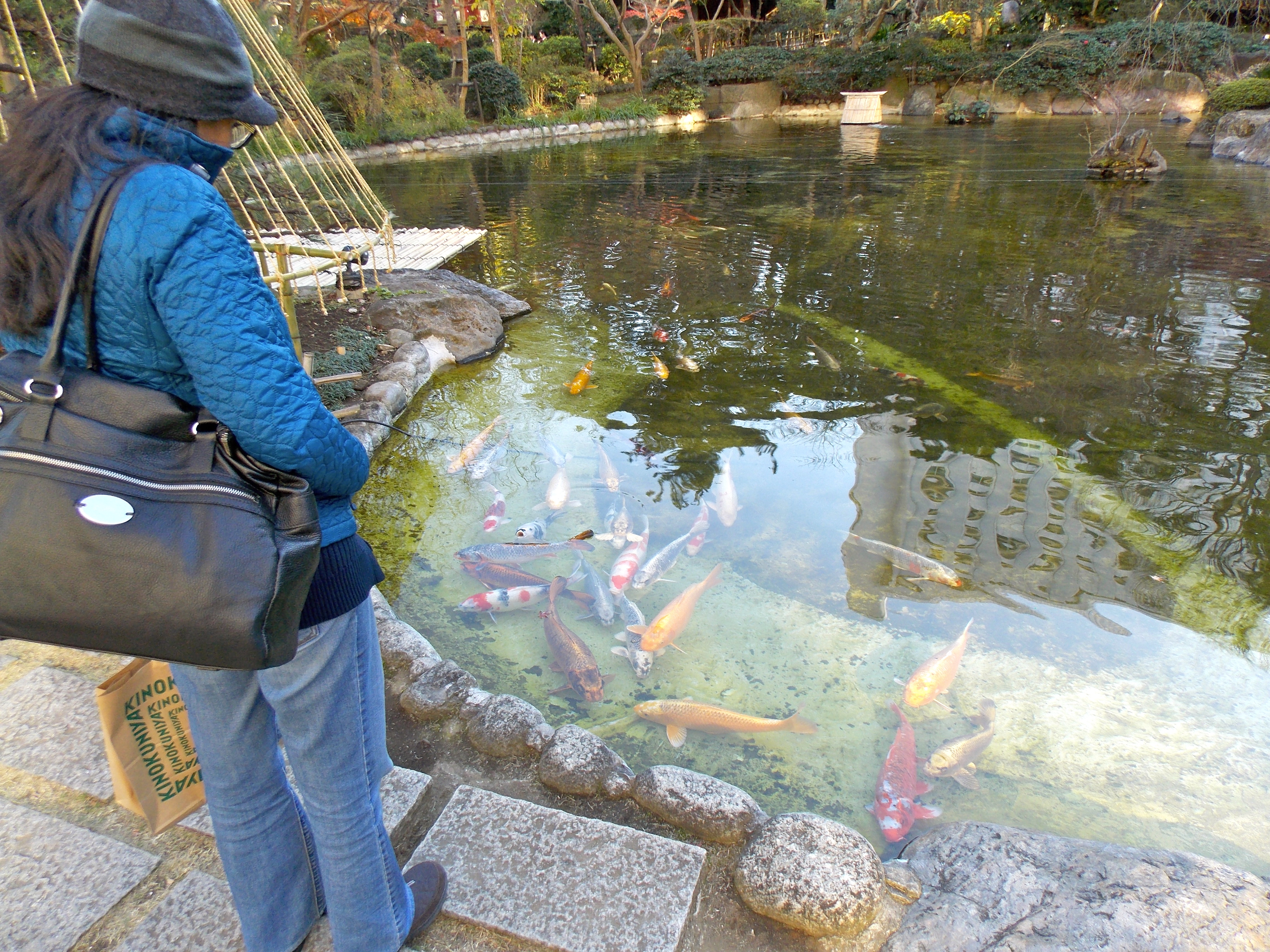
I sit on the window ledge of our room, 1256.  Ornamental “finished’ carp lie still at the edges of the koi pond—silver, orange, red, white skin jeweled with red and blue, sleeping with eyes open: emblems of compassion. The wooden fish drum, mokugyo, is used during the recitation of sutras.

DSCN0578 (1).jpg

In this city of the 33-temple Kannon pilgrimage, she is there, hidden, behind red doors.

Please let me see your temples, Kannon. 

DSCN0579 (1).jpg

Up the Ladder to the Roof

After all, the roof is closer to heaven.

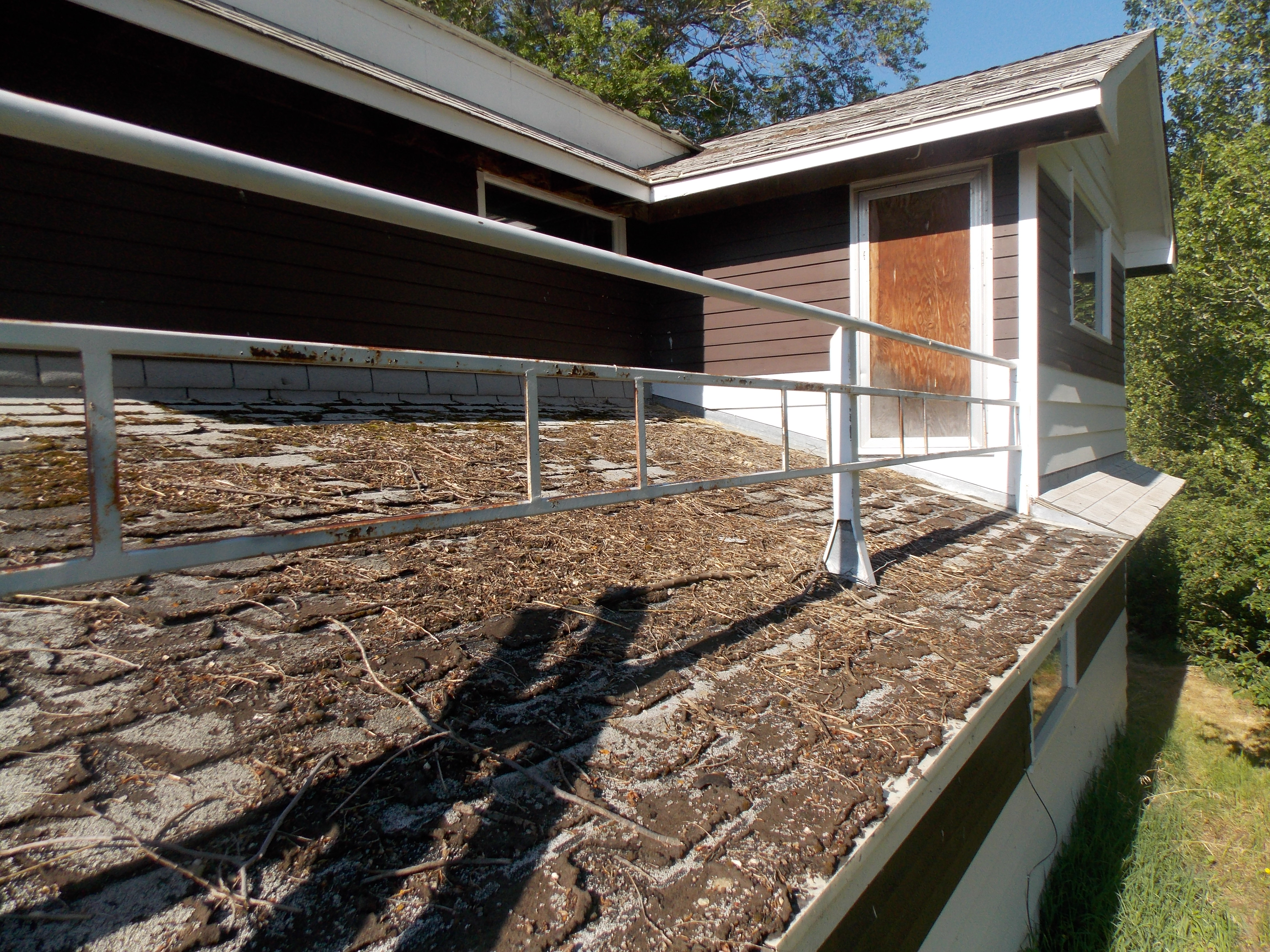
There was a stairway to the roof of my father’s house when I was growing up. It was one of Dad’s somewhat eccentric architectural flourishes added when he cut off the peak of the house in his renovations. There was and is a sort of deck up there on the north side of the house, but it’s a bit too steeply inclined to comfortably recline on a deck chair, unless you nailed down the chair and roped yourself in.

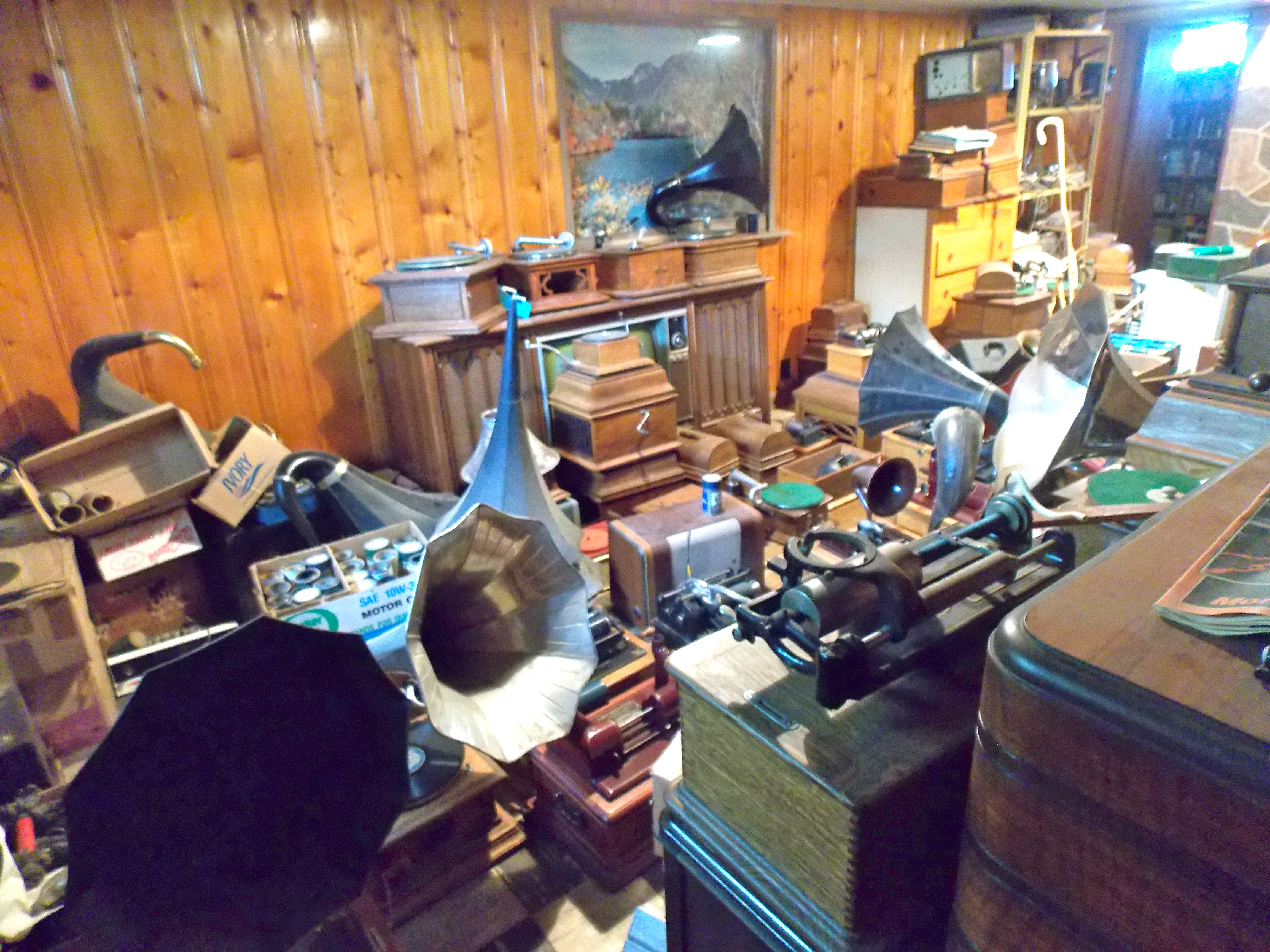
DSCN5143At the beginning of the new millennium Dad started building an addition onto the northwest bedroom (which used to be Ray’s and mine), with a plan to make it into a display room for his gramophones. The addition cut off the staircase to the roof, which was no longer functional anyway.
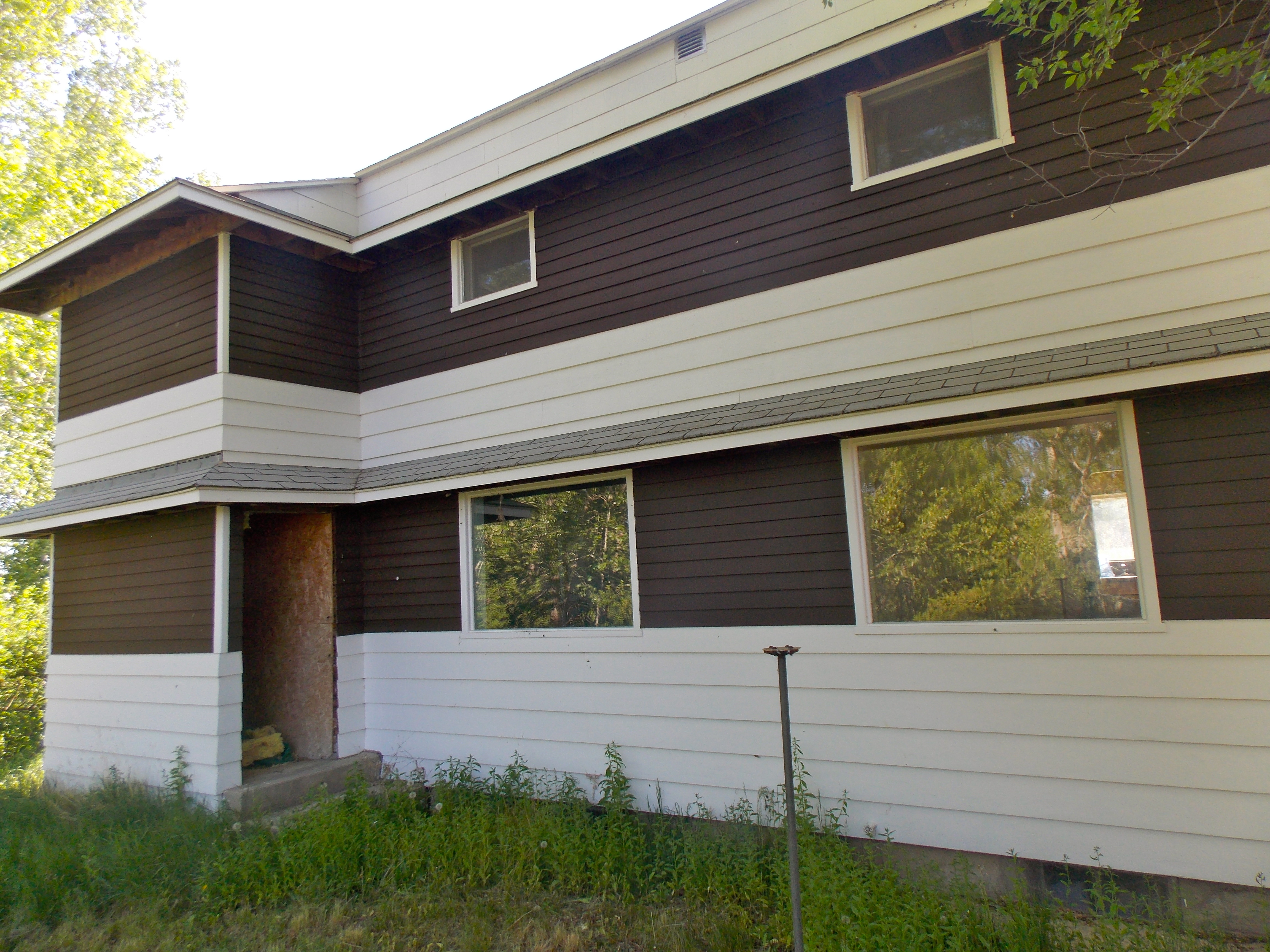
DSCN5165Dad was diagnosed with asbestosis before he could complete the plan. What was it John Lennon said in that song about his beautiful son? “Life is what happens to you when you’re busy making other plans.” Or, eventually, death is what happens to you.
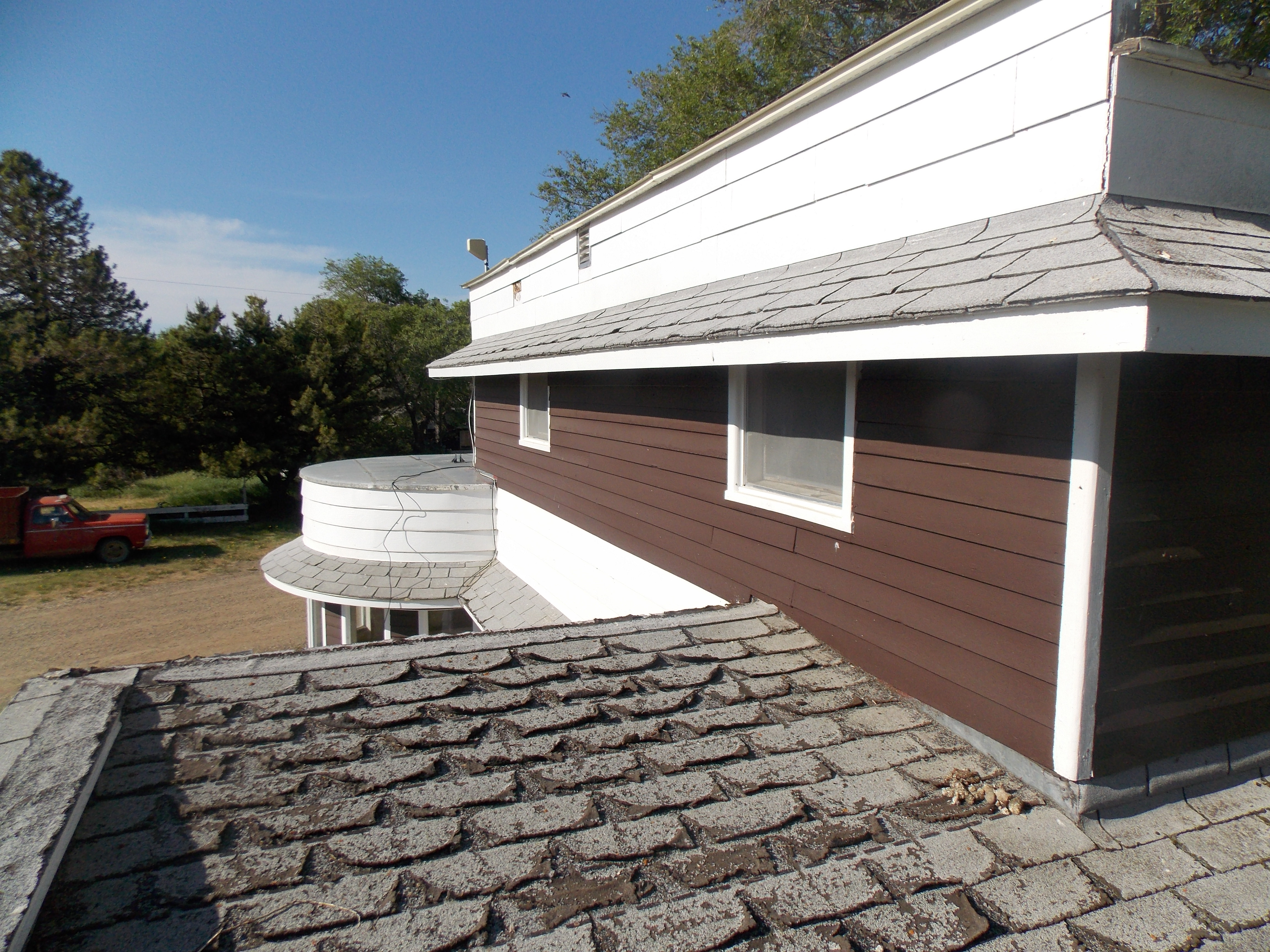
DSCN5145When I started this…thing–I suppose it’s a blog, but I like to think of it as a story with pictures–I conceived it as a way of talking about impermanence and loss: about losing my father, and losing my youth, all of which is tied up in that house.  Dad grew up and died there and it still stands, somehow physically containing all of those memories: his memories and my memories and the memories of everyone who lived there.
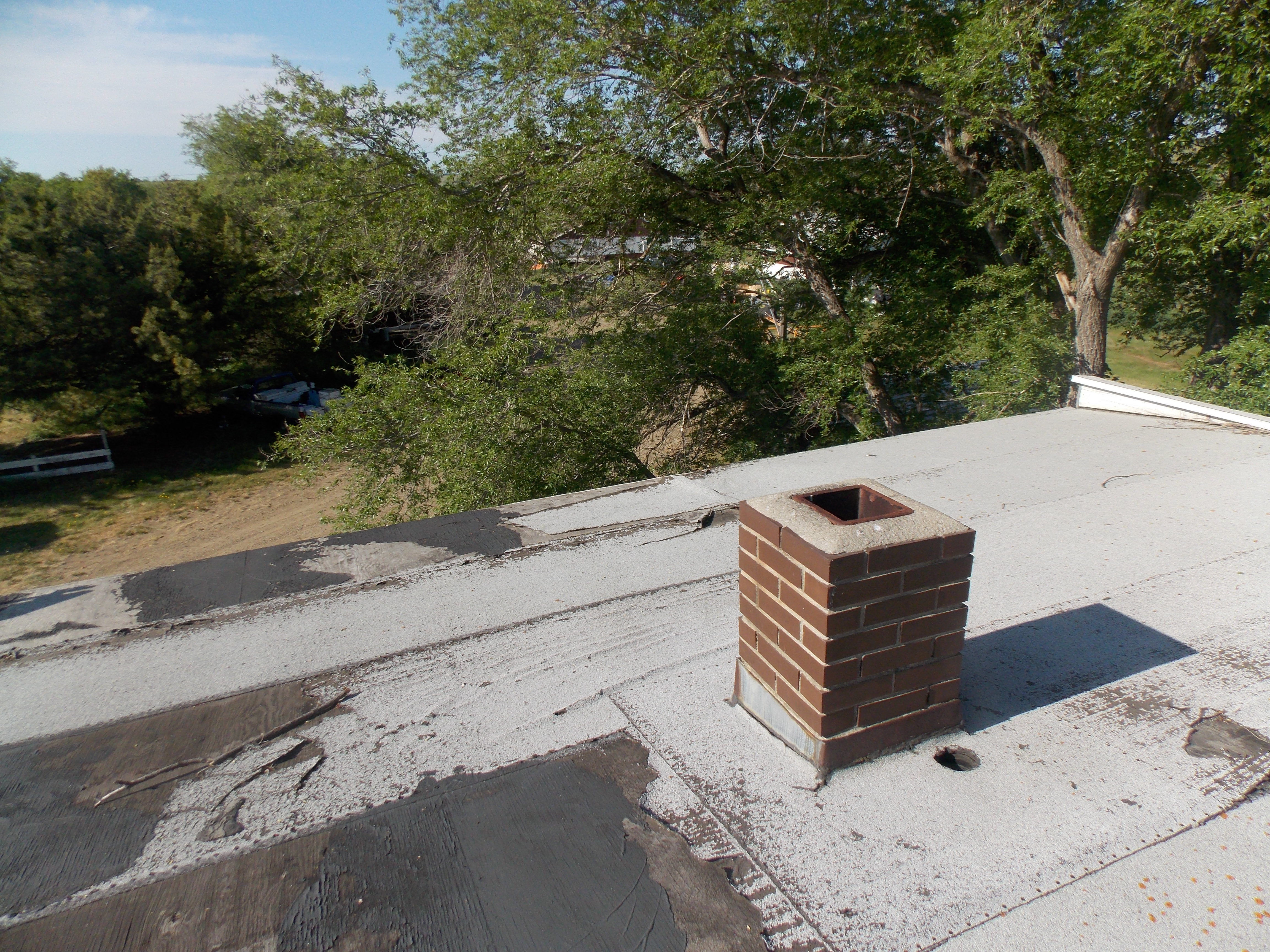
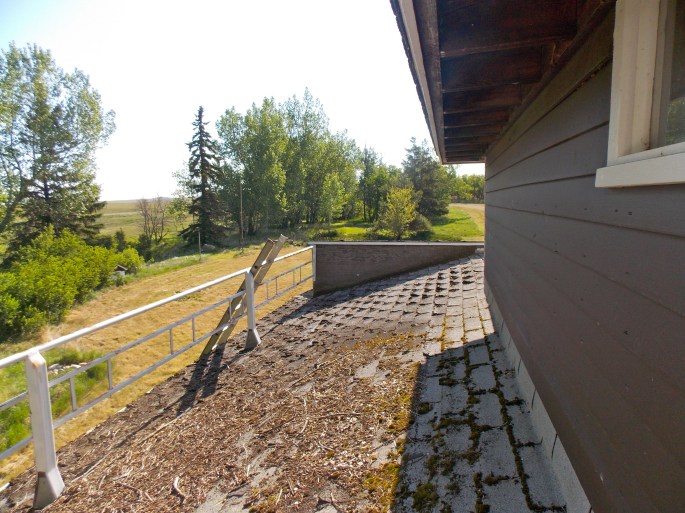
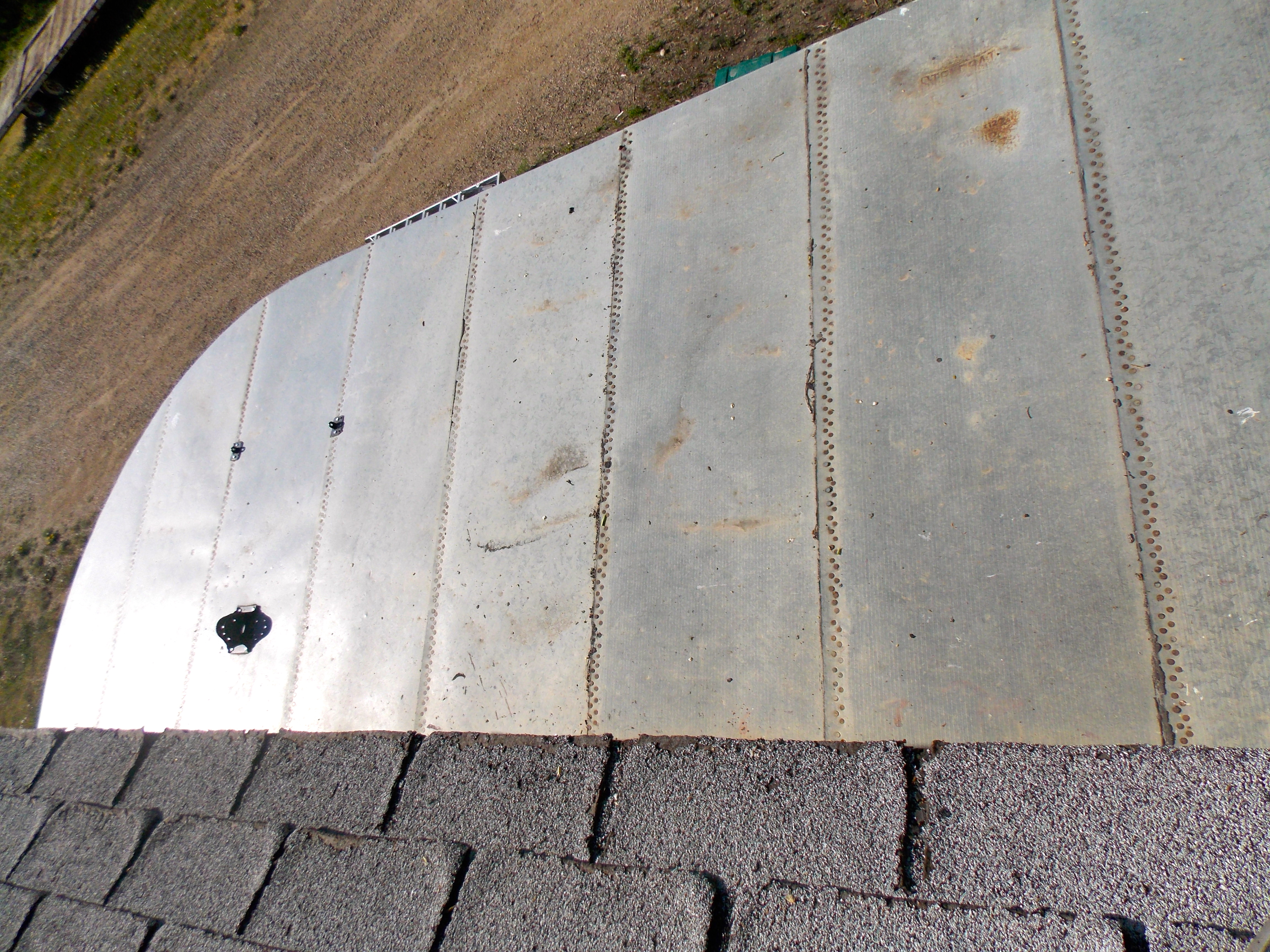
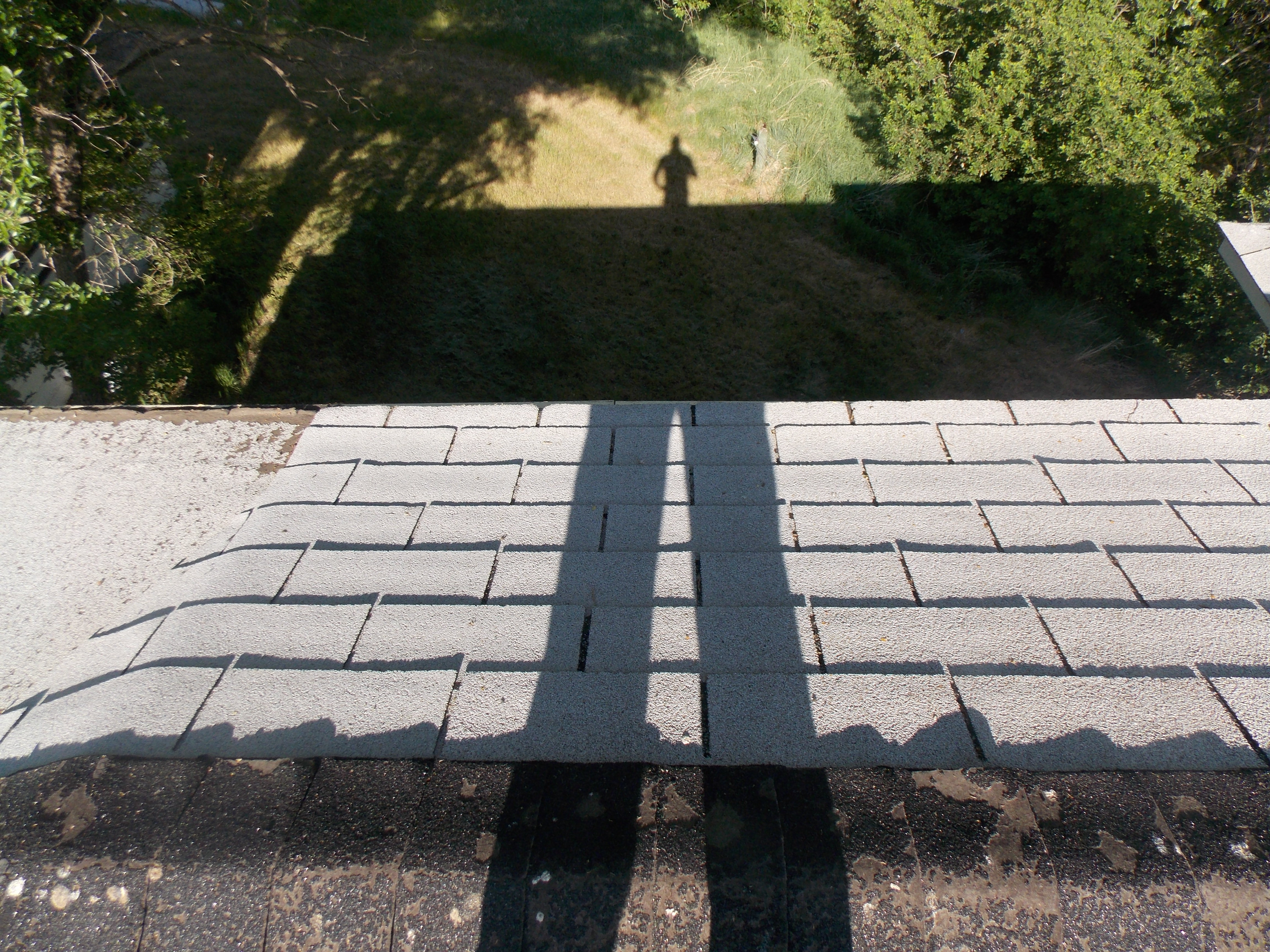
DSCN5149While I was writing this thing, we lost my mother, and it became about that loss too. Last June, the day after she died, we all went home to the farm and I climbed up on the roof and took these photos. When I look at the tin roof over the kitchen I can’t help but think of lying in bed listening to the patter the rain made against that tin. And I can’t help but think that maybe this would be a good place to end.
DSCN5151After all, if it’s a story it needs an ending. Problem is, I’ve never been good with endings. Maybe too much of that Modernist sensibility in me that endings should be ambiguous in order to accurately reflect reality–the problem being that most readers end up thinking, “What was that all about?” and tell the next reader that it just wasn’t worth it in the end. Or simply shake their heads and say nothing at all.
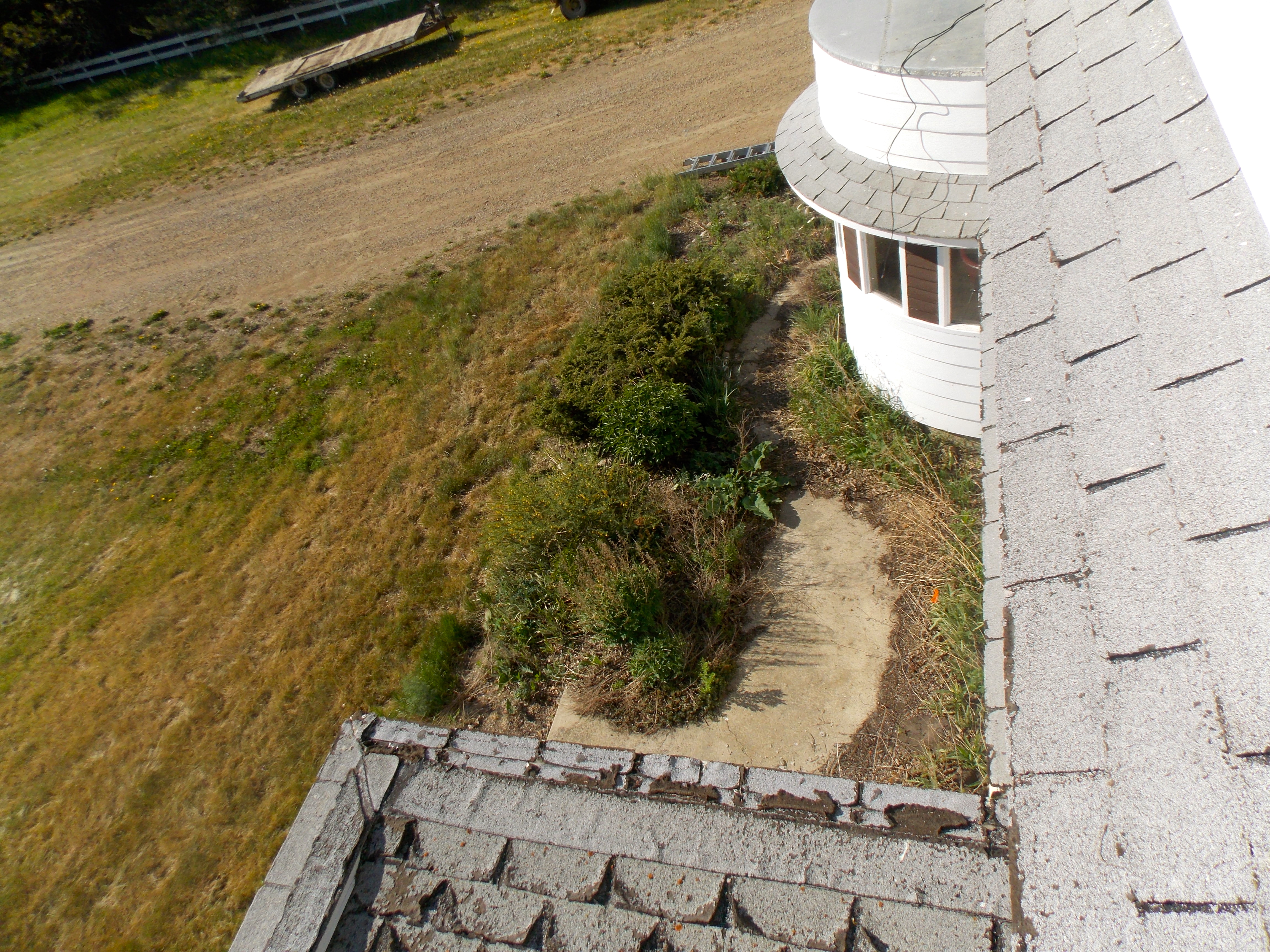
DSCN5157So what was it all about? What is it all about? I guess if I had to say, I would say it is about how my father and my mother taught us the importance of making beautiful things. Or trying, at least. Human things, beautiful at times in their ugliness and in their mistakes. Just do your best to make those things as beautiful as you possibly can. There is not so much to regret in a life dedicated to the making of beautiful things.
DSCN5154


Aunt Shirley

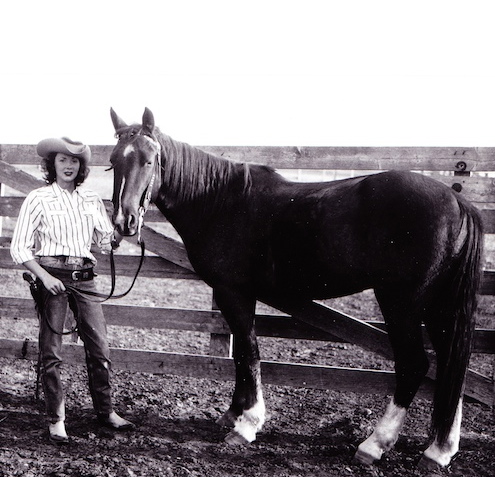
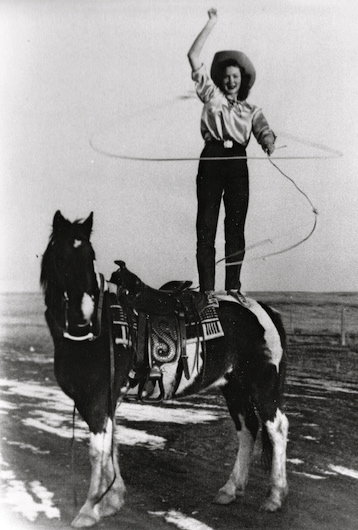
Aunt Shirley was with Aunt Carmel when she saw Bobby Hill, the rodeo clown, perform at Frontier Days in the 40s, and both went home and started practicing their roping. They shared a bedroom at the top of the stairs, along with their older sister Juanita, and there must have been competition between them as they sharpened their skills. Carmel once told me that Shirley was the better roper when they were girls. Here’s a shot of Shirley doing a trick with two ropes that you probably won’t want to try at home.

IMG

They kept on practicing and in the 50s, as I recounted in an earlier post, Shirley and Carmel led The Swift Current Boys Band to victory at the Calgary Stampede:

https://leegowan.wordpress.com/2015/03/07/the-swift-current-boys-band/

When she was 17, Carmel started a career in show business that stretched through many decades. I’ve told that story in three more previous posts starting with this one:

https://leegowan.wordpress.com/2015/03/13/from-roy-rogers-to-captain-kangaroo-to-the-moulin-rouge/

Much to Carmel’s chagrin, Aunt Shirley gave up the ropes and chose a different path.

Shirley and Carmel

Why give up something for which she had such talent? According to Shirley, her body made her stop. Even by her early 20s her back was giving her problems. Carmel herself once told me that jumping up and down for so many years had pounded her spine to the point that she was an inch shorter than when she was younger. So why was she so critical of Shirley? Because she believed Shirley actually gave up roping for a man, and if there was one thing Carmel couldn’t stand the idea of, that was giving up anything for a man.

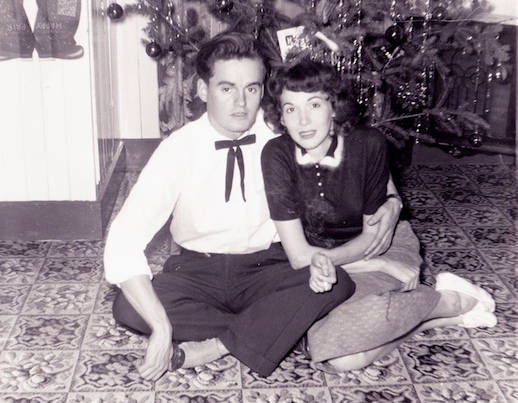
mom and dadVital Monette was barely a man when he met Shirley: only eighteen, she being the older woman. Carmel had already run off to join the circus, so he didn’t have to deal much with her direct animosity, but there was still the rest of the Gowan family: Irish Protestant Orange stock who were more than a little suspicious of his French Catholic roots. In spite of the less than enthusiastic reception, they married and moved into my father’s house, then still my grandfather’s house, where the family could keep a close eye on him. They likely suspected he was one of those fabled latin lovers who would run off and leave Shirley the first chance he got.
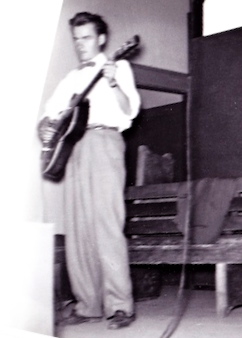

IMG_0002

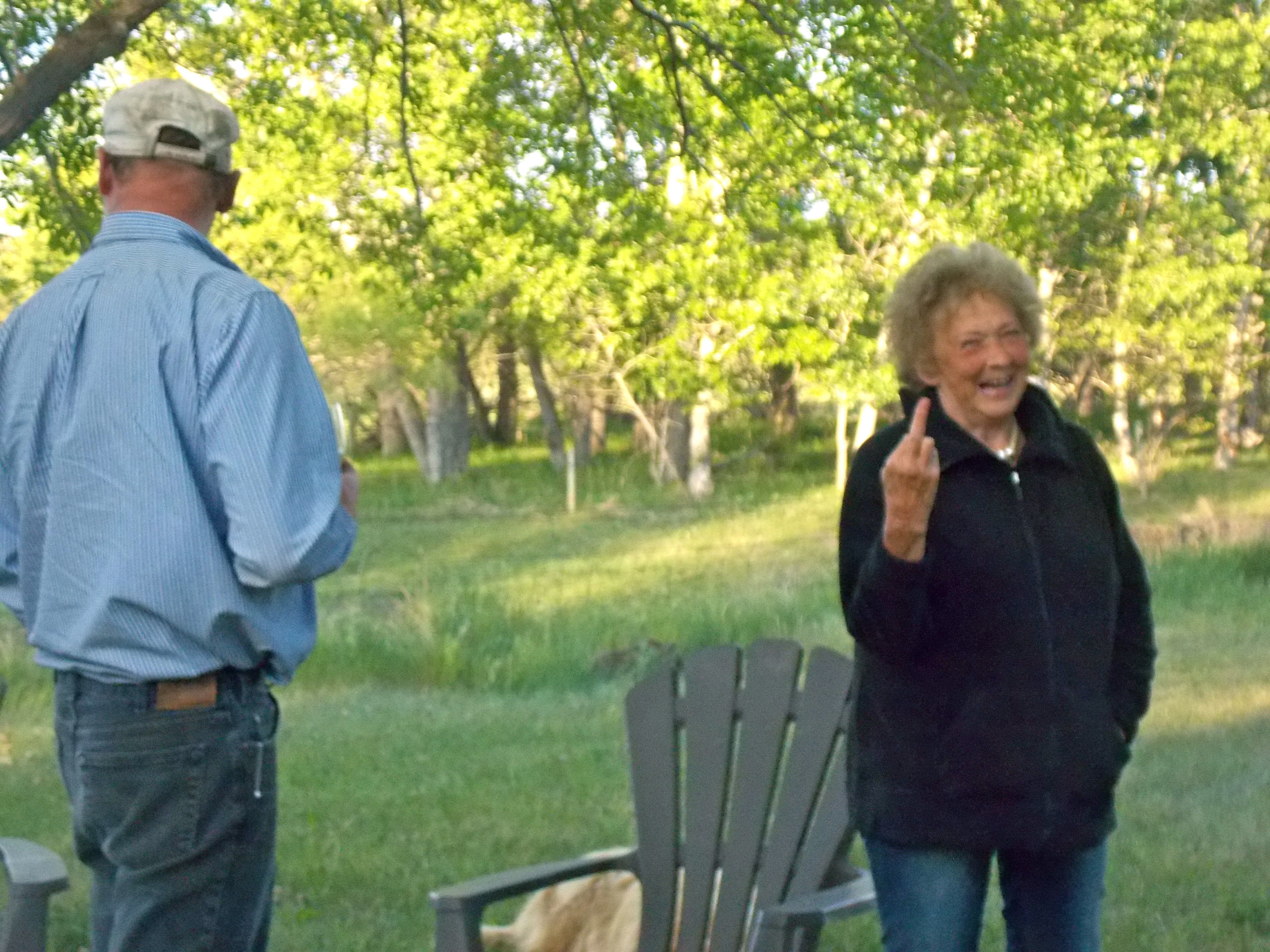
If so, they were wrong. Shirley and Vital bought some land and ranched a few miles from the farm where I grew up. They had three kids: Cindy, Roy, and Carol. I remember visiting them or them visiting us on many a Christmas Eve and other family celebrations. Last summer I saw them at Mom’s memorial, and while Aunt Shirley and Uncle Vital had slowed slightly, they had as much of that vitality contained in his name as ever. Shirley even demonstrated that she doesn’t always like having her photo taken.

DSCN5115

Introducing The Beautiful Place

In ancient Egypt The Beautiful Place referred both to the underworld where the dead went to live and also to the embalming studio where the Pharoahs’ bodies were prepared for the afterlife. Their organs, except the heart, were removed and their bodies were rubbed with oils and perfumes and stuffed with sawdust, then wrapped in linen.

egyptian-mummification-egyptian-mummification-life-science-centre-education.jpgFlash-forward a few thousand years and around the globe to Saskatchewan in 1924.

Sinclair Ross was sixteen years old when he got his first job working for The Union Bank (soon taken over by The Royal Bank) in the tiny town of Abbey, Saskatchewan. Today it would take you about an hour to drive from the farm where I grew up to Abbey.

Ross began writing stories in the early 1930s and published a collection set during the dust-bowl, or “The Dirty Thirties”, as my father called those years of his youth which so shaped his view of the world. The collection was titled The Lamp at Noon. The most well-known story, “The Painted Door”, was so widely anthologized that my favourite Doctor of English Literature, Dr. Ranjini George, remembers reading it when she was studying in India during the 1970s.

In 1940 Ross published his first novel As For Me and My House. The novel takes the form of the diary of Mrs. Bentley (we never learn her first name), the minister’s wife in the prairie town of Horizon, a place which perhaps reveals some similarities to Abbey, Saskatchewan.

imgres-1.jpg

When I moved to an apartment on Comox Street in The Westend of Vancouver in 1985, Sinclair Ross lived in a condo two or three blocks away from me. I may have passed him on the street, but if I did I did not recognize him. I had no idea he was living there.

Seven years ago my boss Ed Carson, at The University of Toronto, School of Continuing Studies, suggested I should make my next novel a sequel to As For Me and My House. I took Ed’s inspiration, put a little twist on it by adding a Sci-Fi element, and wrote The Beautiful Place. The main character, the grandson of Philip Bentley, is the sales manager of Argyle, a cryonics company. The company’s highly secure state-of-the-art facility where they store the bodies of their frozen patients is called The Beautiful Place.

I’d like to acknowledge Keath Fraser’s wonderful memoir As For Me and My Body as a source of inspiration for my novel.

imgres-2.jpg

The Beautiful Place took twelve long years to write. I hope you will seek it out and enjoy it.

The Swift Current Airport Light

I grew up on a farm southwest of Swift Current, Saskatchewan. If I looked to the northeast on any night of my youth I would see a light sweep by on the horizon. The beam would pass in an instant and if I counted to ten it would appear again for another instant, then pass again into darkness. All night long. Every ten seconds.

I guess there must have been nights it was obscured by some sort of weather. A blizzard would certainly do the trick. But most nights, if you looked, you’d see it flicker past. Ten seconds later it would be there again. And then gone.

We had a kind of inside joke, us kids, when we were outside at night, maybe playing frozen tag in the yard. We’d say, “You can see the airport light from here,” and then we’d laugh. Or if we were swimming in or skating on the creek in the moonlight we’d say, “You can see the airport light from here.” And we’d laugh. Or if we were drinking beer around a campfire and a sort of awkward silence fell over the conversation, we’d say, “You can see the airport light from here.” And laugh.

It was funny because you could see the airport light from anywhere and everywhere in our world. Every night. Every ten seconds. It was certain. It was self-evident to the point of absurdity. It was something you could count on. Literally.

Time passed. I went away. I did some things. I accumulated some things and I lost a few things, including my hair.

And one day, though I must admit that I couldn’t even say exactly when, I returned to find the airport light was gone.


Nighthawk

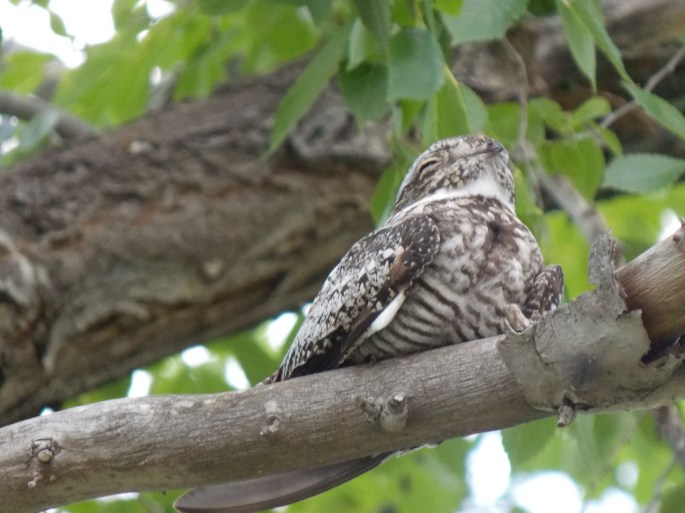
Daytime is risky for the nighthawk. In the evening you can hear them flying overhead, eating mosquitoes and other small insects, but in the daylight they sleep on branches or sometimes even a fencepost, trusting that their feathers will fool predators into thinking they are part of the tree or the post. Last summer I took these photos from only a few feet away while down below the boys, Adam and Daniel, were roasting meat (and sugar) over a fire for their lunch.

DSCN1609DSCN1610My nephew Daniel likes to sleep when the sun goes down but my son Adam, being a nighthawk, prefers to sleep in the daylight hours, thus running similar risks as his feathered namesake. He does his best to blend into his blankets. Though we did not know it at the time, we were spending our last summer with their Grandma Laureen, camping at Gowan’s Grove.

DSCN1648DSCN1672We planned another week with Mom at the Grove this August, but on May 30th she fell and broke her knee. Adam more than any of us could appreciate the pain she must have been going through, having dislocated his patella last spring. When a medical team at Regina General operated on Monday June 1st they found cancer in Mom’s knee. Then, while still under the knife, she had a heart attack. The doctors did not think she’d come out of ICU alive, but she stabilized and they returned her to her hospital room. My sister Alison and I booked Wednesday morning flights. Adam told me he wanted to come too, but he had three exams and four essays to finish, and I argued with him that it wasn’t necessary. I’d go ahead and let him know if he should come.

When Alison and I arrived in her room at noon on Wednesday, June 3rd, Mom opened her eyes and tried to speak. Ray and Heather and my sister-in-law Shann and my niece Carly were all there. We joined them in the waiting, talking, holding Mom’s hand. Adam had called Heather to say again that he wanted to be with us. I called and told him to come.

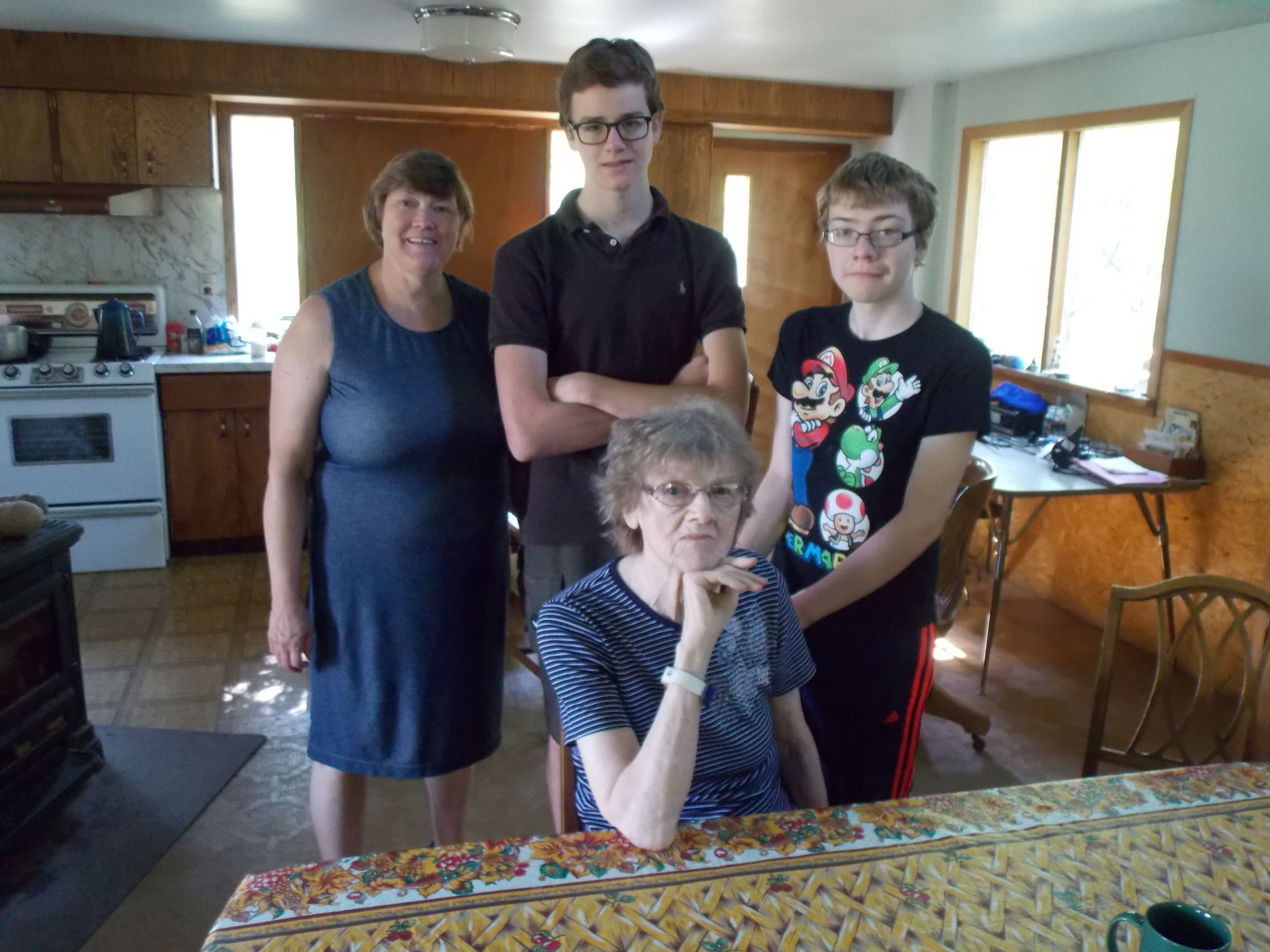
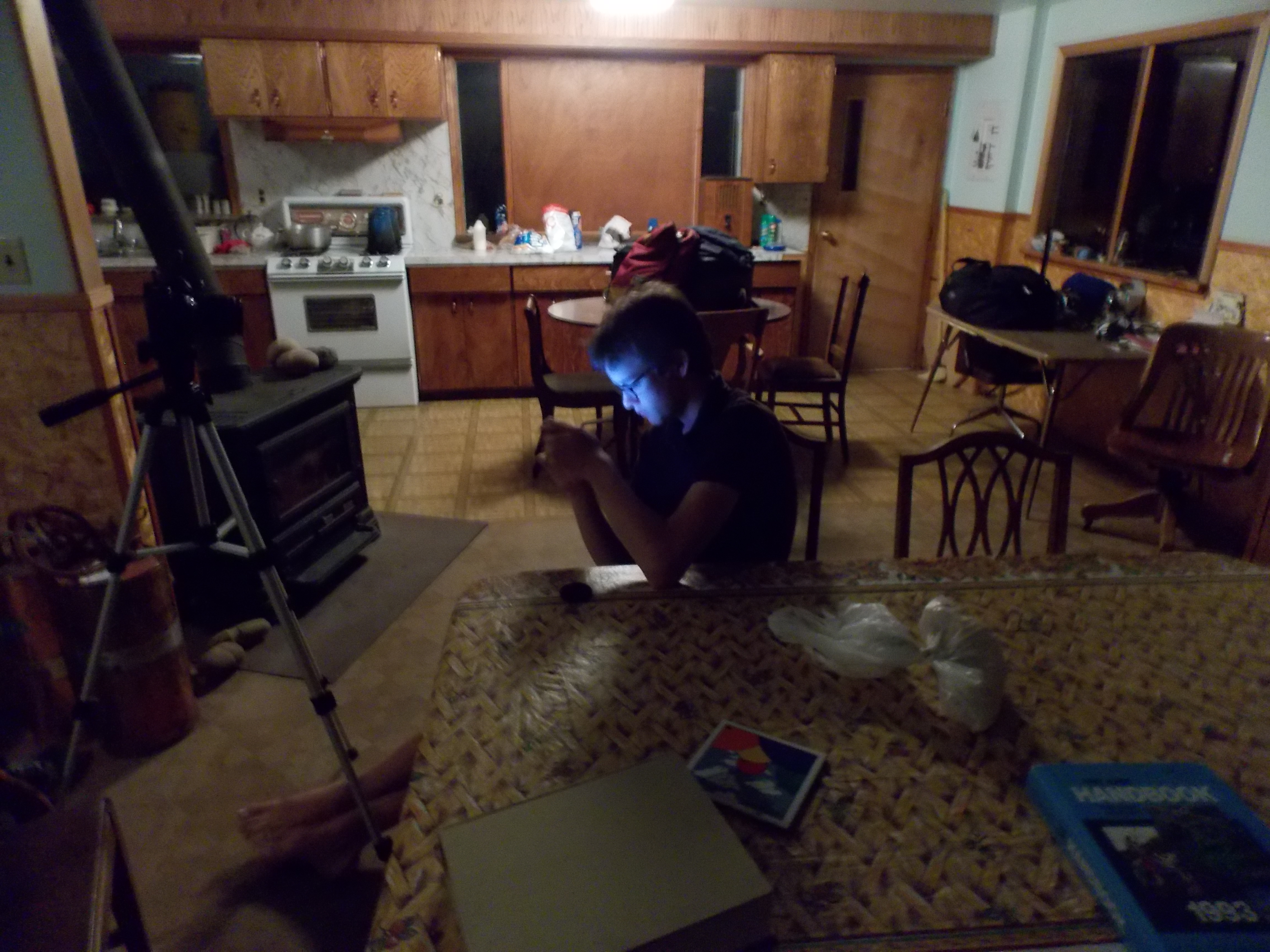
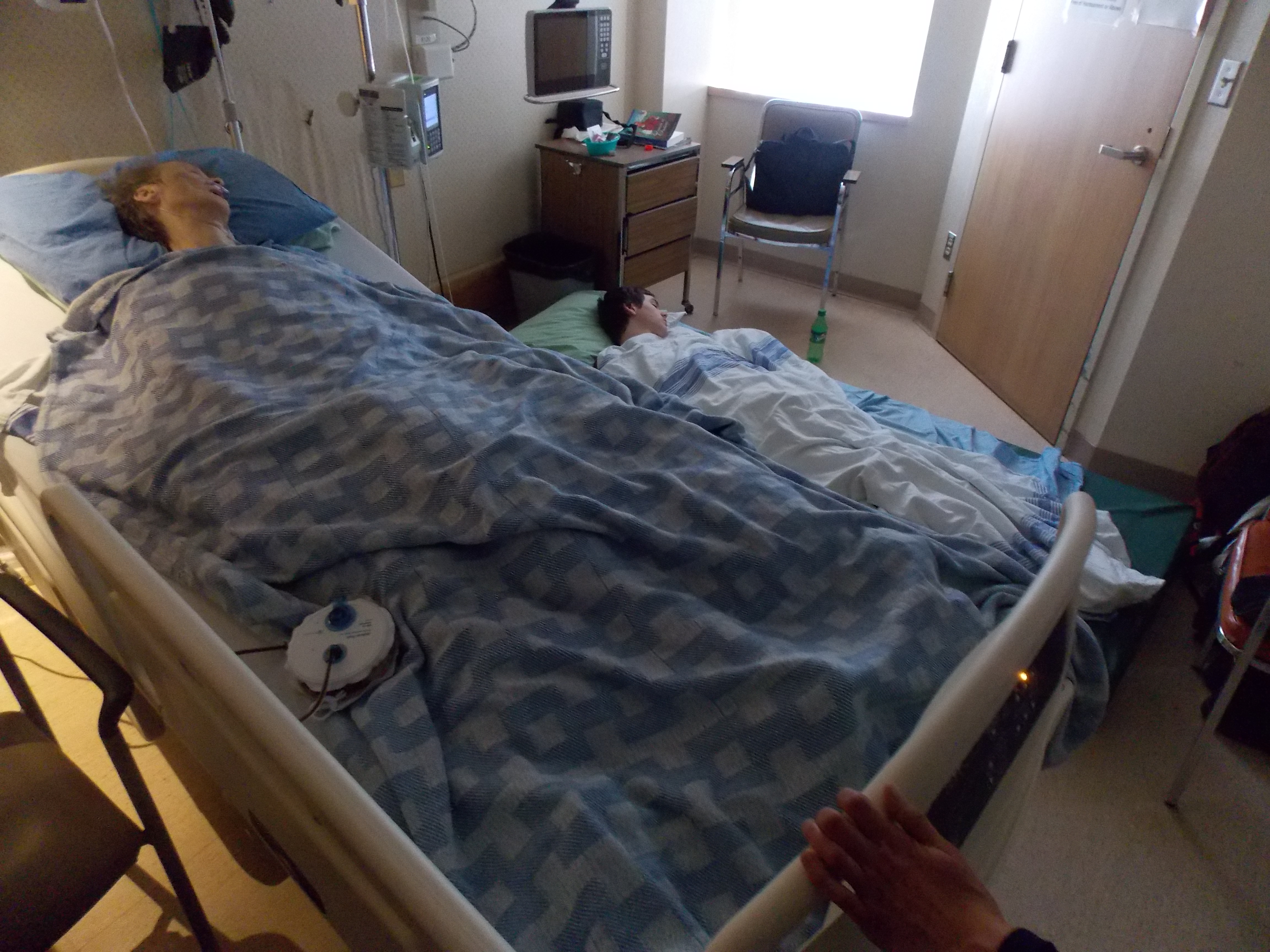
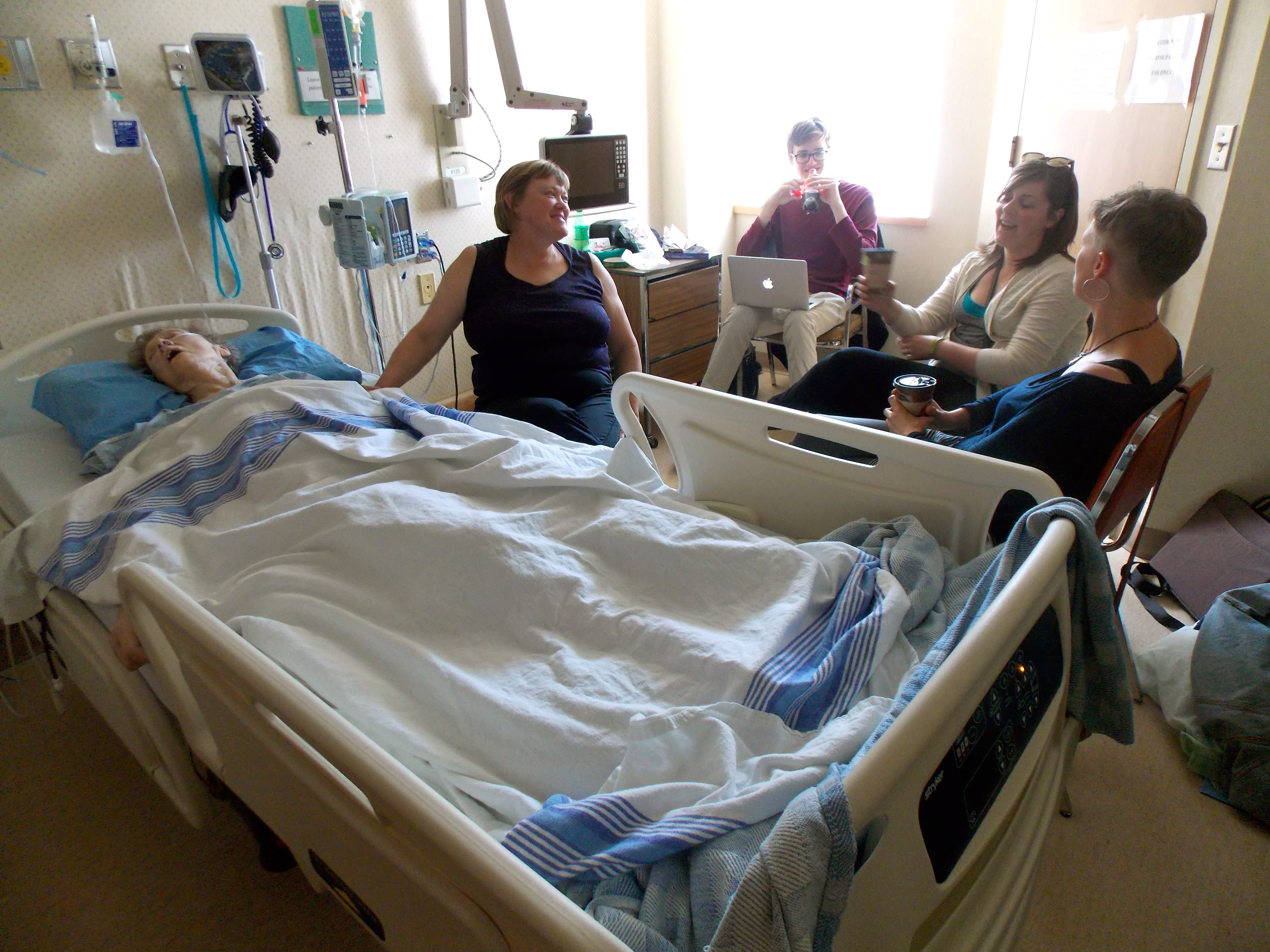
DSCN5081DSCN5082We sat with Mom for hours, listening to her laboured breathing. When we sang songs to her, “You are My Sunshine”, “Danny Boy, “Goodnight Irene” (which we changed to “Goodnight Laureen”), she would often try to sing along. At eleven that night Adam arrived and insisted he wanted to stay there in the room with her. Heather had already gone home for the night. The nurses found him a mattress and Alison and I went to get some sleep at a Hotel, leaving him to sit vigil through the night. When I arrived back in the morning they were both sleeping.

DSCN5086DSCN5090

The palliative care nurse let us know that the hospital authorities had decided Mom should be moved back to her care home, Echo Lodge in Fort Qu’Appelle, by ambulance that afternoon, but I said I didn’t think it made much sense and the nurse agreed, recommending that she be allowed to stay in her room. We sat on through the day, Thursday June 4th, talking and singing, reading and thinking, laughing and crying.

DSCN5095DSCN5096

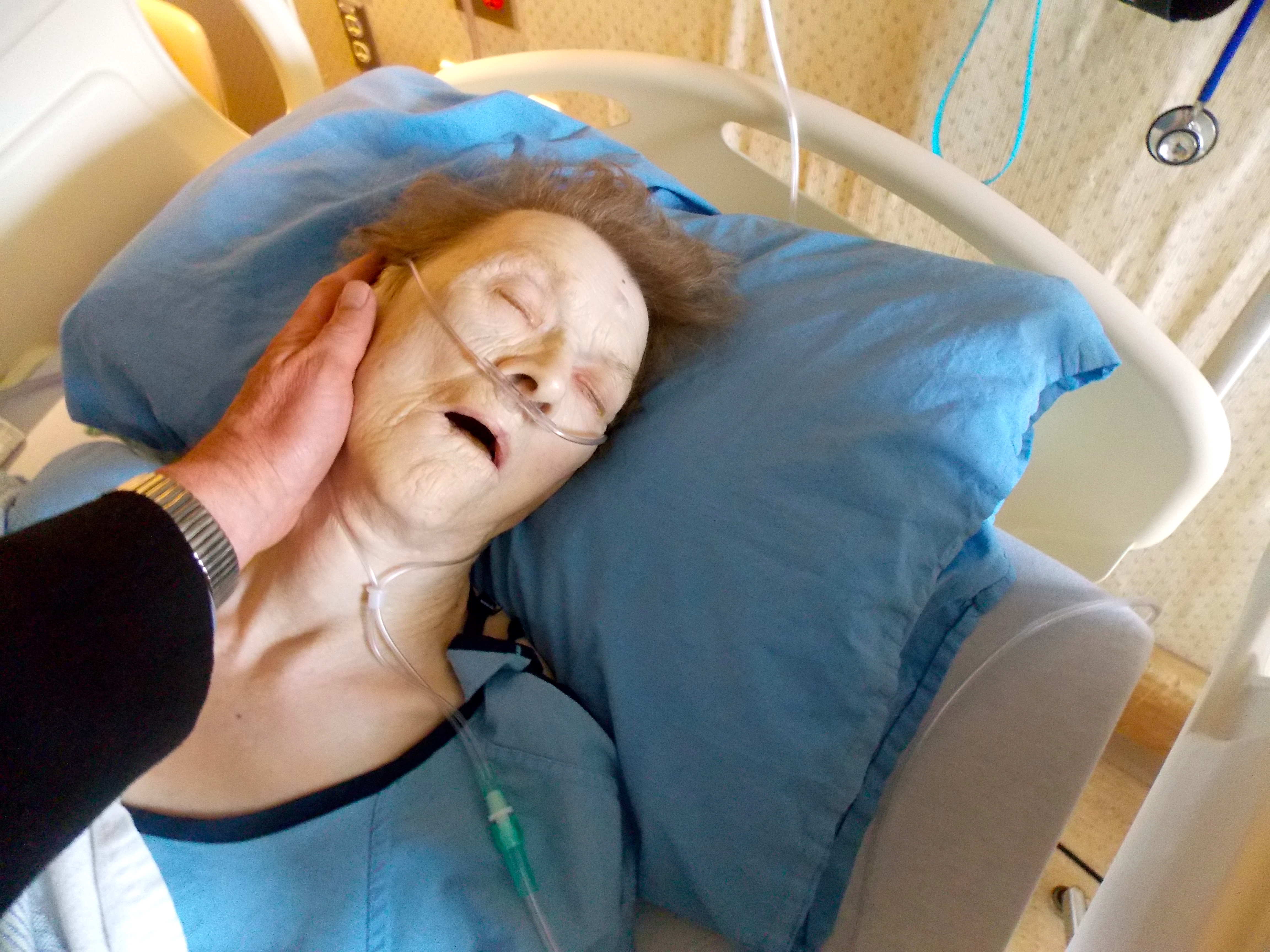
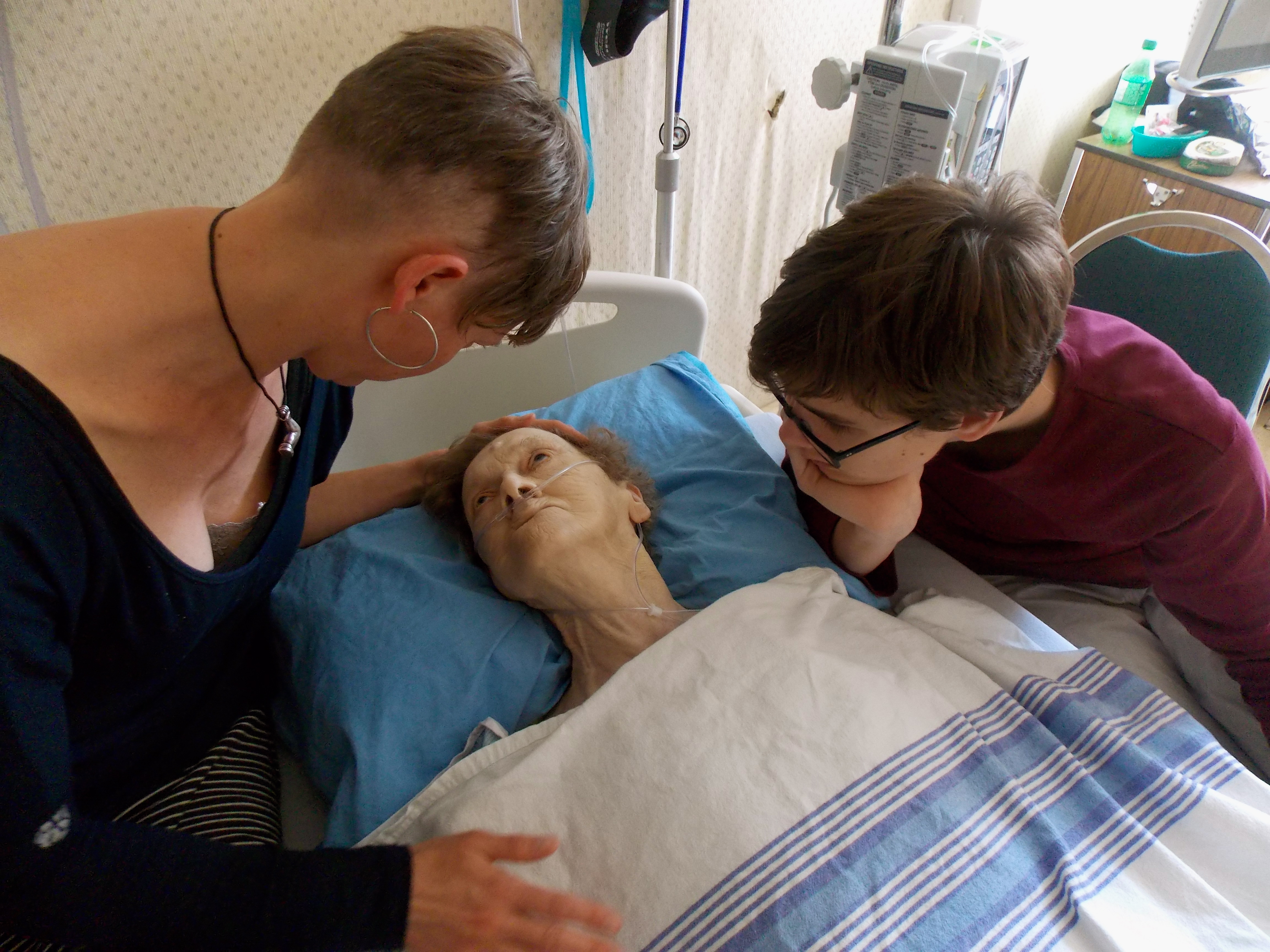
At 5:30 in the afternoon Mom opened her eyes and tried to speak. Alison and Adam went to the bed and told her that we were all there with her. She looked directly into Alison’s eyes for what seemed like 30 seconds and I took this photo.

DSCN5097I put down the camera and spoke to her and she looked directly into my eyes. “We’re all here with you, Mom. We love you,” I said.

She gasped once and she was gone.

DSCN1613We are returning to Gowan’s Grove this summer. We’ll have Mom with us. On July the 11th we’re holding a memorial for her there, where we spread Dad’s ashes eight years ago. In the evening, once the sun goes down and the stars come out, we’ll hear the nighthawk flying over the treetops.

My Mother’s House

After all, it was her house too, for more than half a century.

Laureen Gowan was born on Christmas Eve, 1929, the same day as my father, though he was born in the afternoon and she in the morning.

The older woman.

She was the daughter of Lee and Fanny May (Carson) Gowan. She and her four brothers and five sisters grew up on a farm in Bruce County, Ontario, near the village of Allenford. Another sister, Pearl, died at only seven.

11058401_10153725655633289_1512531181044373193_n

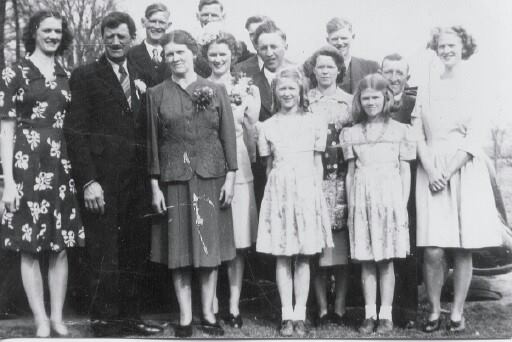
Mom is at the extreme left of the family photo above: appears to be taller than her Dad. Mom’s three surviving sisters, Sadie, Mary, and Anna, fondly remember her as a strong-minded Tomboy who liked doing farm work with the boys. Determined. Adventurous. That spirit led her to leave Bruce County, the only one of her siblings to do so.

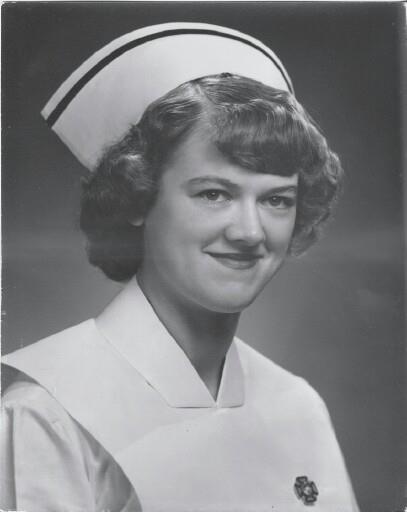
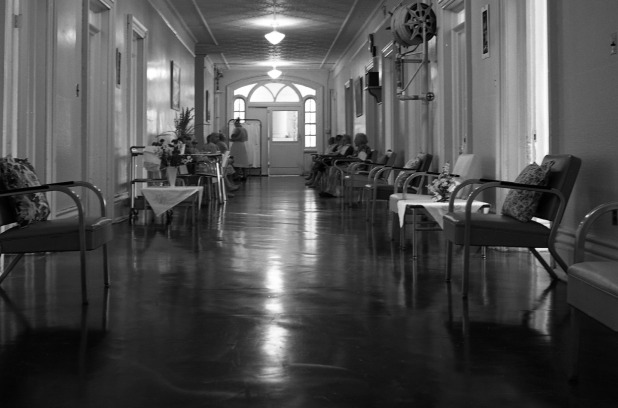
She did her nursing training at Owen Sound General and Marine Hospital and graduated as an RN in a class of 14 in 1951. One of her first jobs was at the London Psychiatric Hospital, pictured below, and she later worked for a year at Toronto Western Hospital before accepting a job in 1956 in Powell River, British Columbia.

9975_10153290198538289_6274002800825157436_n (1) 1176

On her journey across the country to her new job she made a stopover in Swift Current, Saskatchewan, to visit her father’s cousins, Nelson, Goldwin, and Gordon Gowan. Goldwin was on the Swift Current Union Hospital Board and found her a job. She gave up on Powell River without ever reaching there, which is the way life often works. Her head had been turned by her 2nd cousin, Joseph Gowan.

393262_10151432248778289_717553407_n1266131_10152205311353289_2046243222_o (1)

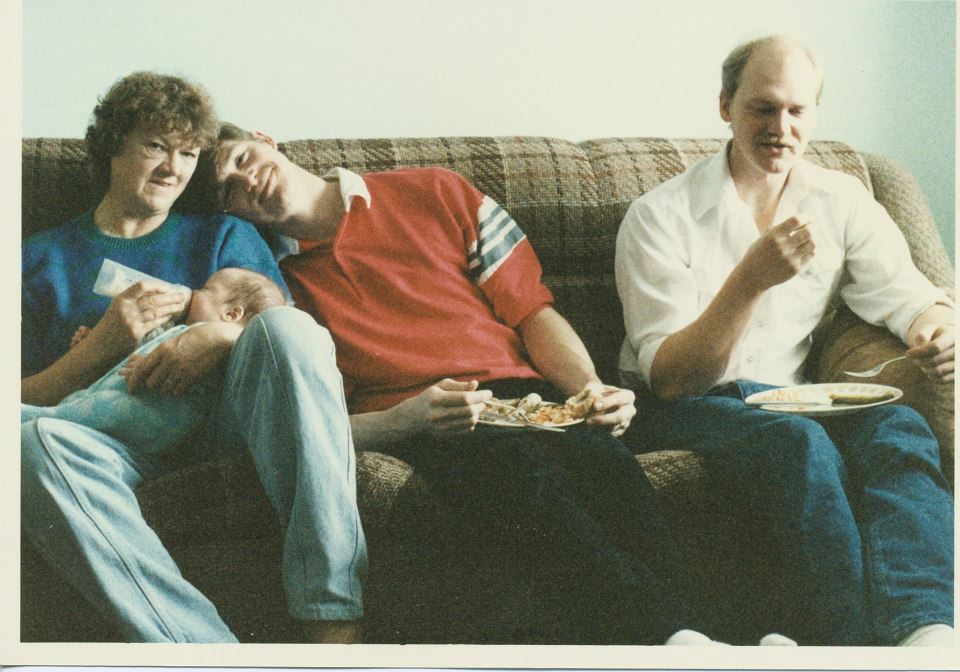
On October 26, 1957, Joe and Laureen married. She moved into the house where Joe lived his entire life. Together they ran the mixed grain and beef farm, and raised four children: Heather, Lee, Raymond, and Alison. Unfortunately for the rest of us, after Heather was born they stopped taking photographs. Fortunately they got some great ones of her.

404986_10151556309198289_1749424354_n (1)10609603_10153160559903289_3186385260621452086_n

Laureen was a full partner in all aspects of working the farm, helping out from seeding to harvest and managing the cattle. She also planted one of the largest private gardens anyone is ever likely to see, growing enough produce for the family and many friends and neighbours.

171619_10150201639598289_5605616_o10399920_150720178288_6988168_n

Laureen was known for her inquisitive mind, subscribing to her Aunt Wynn’s declaration that you should never let your housework get in the way of your reading. She encouraged all of her children in their chosen paths, Heather as a teacher, Lee as a writer, Ray as a farmer, and Alison as a musician and teacher. Even in her final years she was still a feared Scrabble opponent.

10292220_10152882105583289_4744177869277017787_n

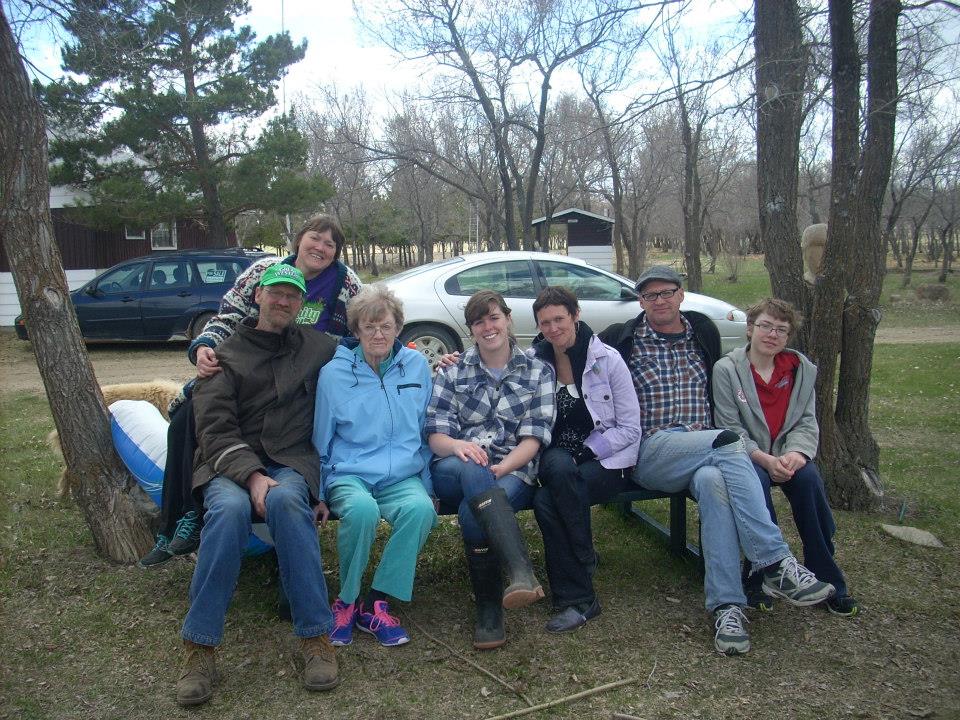
She died on June 4th, 2015, surrounded by by her family. We will remember her for her determination, her laughter, her kindness, and for her watchful greyish-blue eyes. We will miss her very much.

1655983_10152609107003289_406381244_n259622_10151345282383289_1276276416_o

Down in the Basement

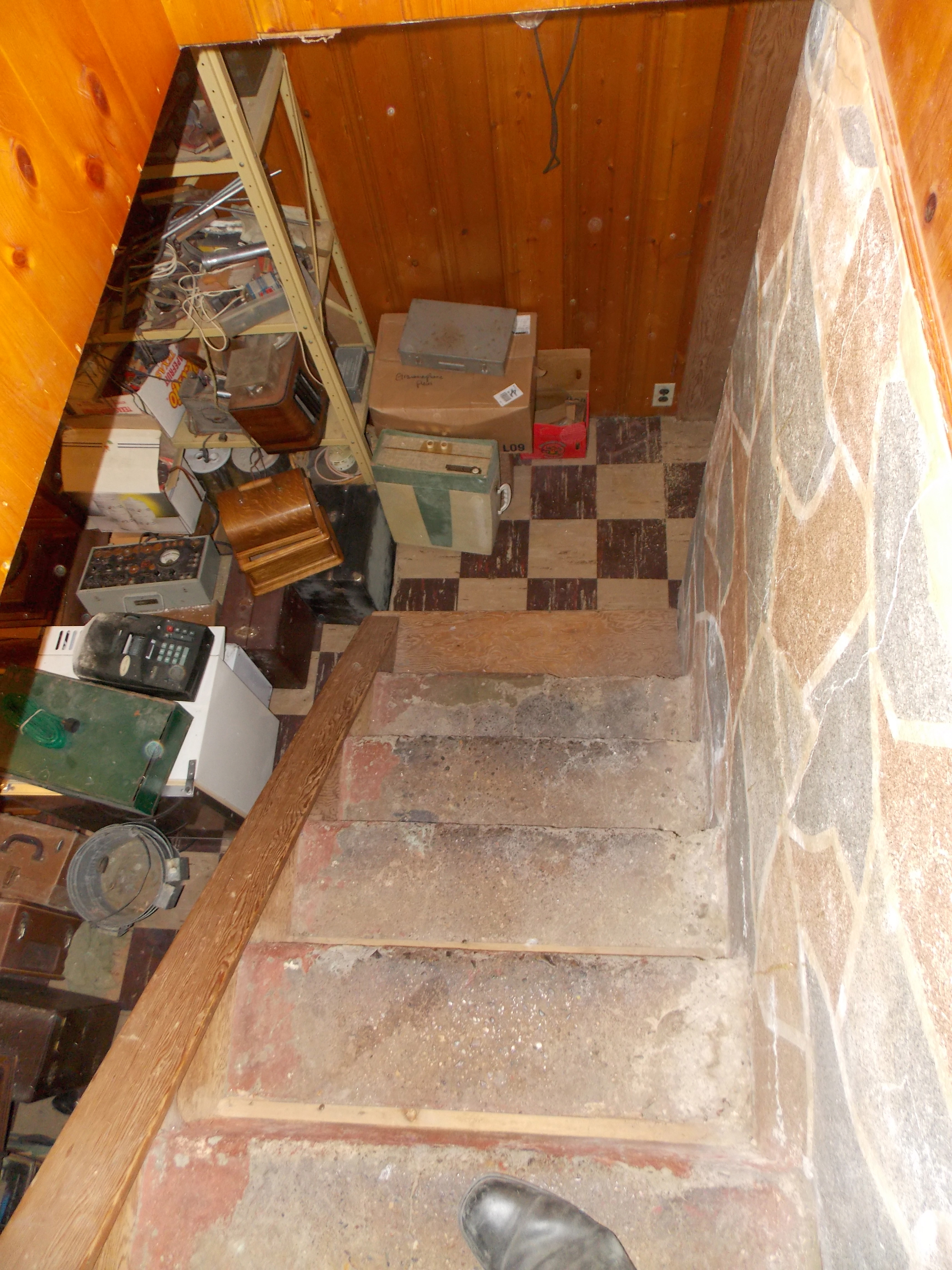
I spent most of my youth in the basement. Not in terms of time–seconds and hours and minutes and days and years–but in terms of the profligate expenditure of my innocence, much of it was done down there.

DSCN5036In grade eleven, 1978, without a word of discussion with my parents, I bought a stereo from Robinson Electronics for over a thousand dollars (with money I’d made working on the farm), brought it home, and set it up in the basement. It was powerful enough to shake the entire house. The first record I played to test the machine was “A Farewell to Kings” by Rush. I had a considerable collection of albums, ranging from the sublime to the embarrassing (The Velvet Underground to Alice Cooper to Ted Nugent), but I wanted to start this new stage of my life with something completely Baroque and, not knowing Vivaldi, I chose Rush. My parents were not pleased by Rush or by my purchase.

DSCN5037My father designed the basement as a recreation room, with fireplace and vertical siding. Perhaps its most unique feature was a picture-window-sized framed photograph on the north wall that could be switched to one of four different landscapes: forest, mountain, beach, desert. The spare photos were stored behind the one showing, and you only needed to tilt down the frame to make the shift to a different window on the world.

DSCN5178

I don’t recall my father ever spending much time down there, except on hot summer days when it was pleasantly cool. The fireplace didn’t draw well, so had a tendency to smoke. I remember my sister and I playing wagon train and other settler games. Later, as a teenager, I invaded and made it my bedroom for a while, until my parents said it wasn’t safe to sleep down so close to the furnace. I doubt that’s the reason they didn’t want me sleeping down there. Even when I was sleeping in one of the upstairs bedrooms again, it had became my private space. I had a scantily stocked bar in a wooden box that I could lock. I even had my own luxury bathroom.

DSCN5040The greatest significance it had for me was that it was my first office, where I taught myself to type on a manual Olympia and wrote my first poems and short stories at a folding card-table I used for a desk. When anyone ran water the pump would hum down in the iron-bacteria well that had apparently been infected back in that fire in the 20s.

DSCN5044

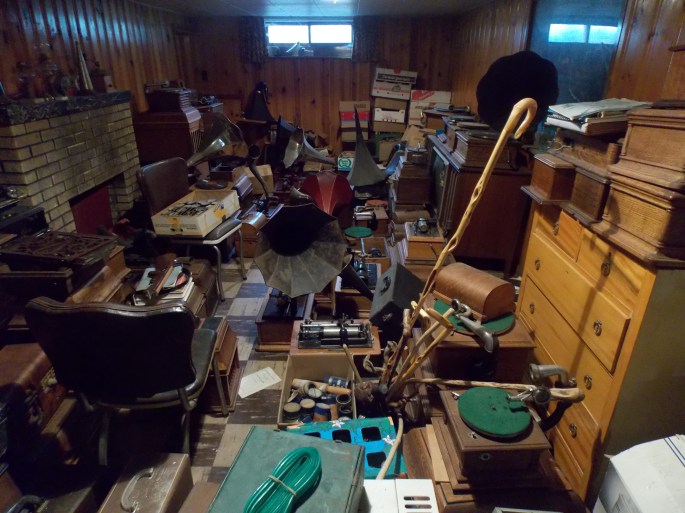
After I went off to University, Ray took over there for a time, but when he left Dad was able to get his basement back. It became a work-room and storage place for his gramophones. Now it overflows with the past, a physical representation of my own untidy mind.

DSCN5039

The Pit

There comes a point in every story when the hero must descend to the underworld. For my siblings and me, that time was often soon after we’d arrived home on the school bus: Mom would give one of us a plastic pail and say, “Go down to The Pit and get some potatoes for supper.”

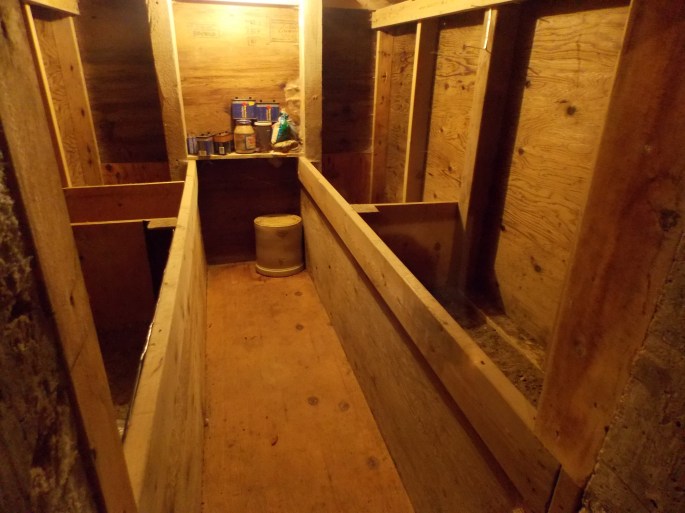
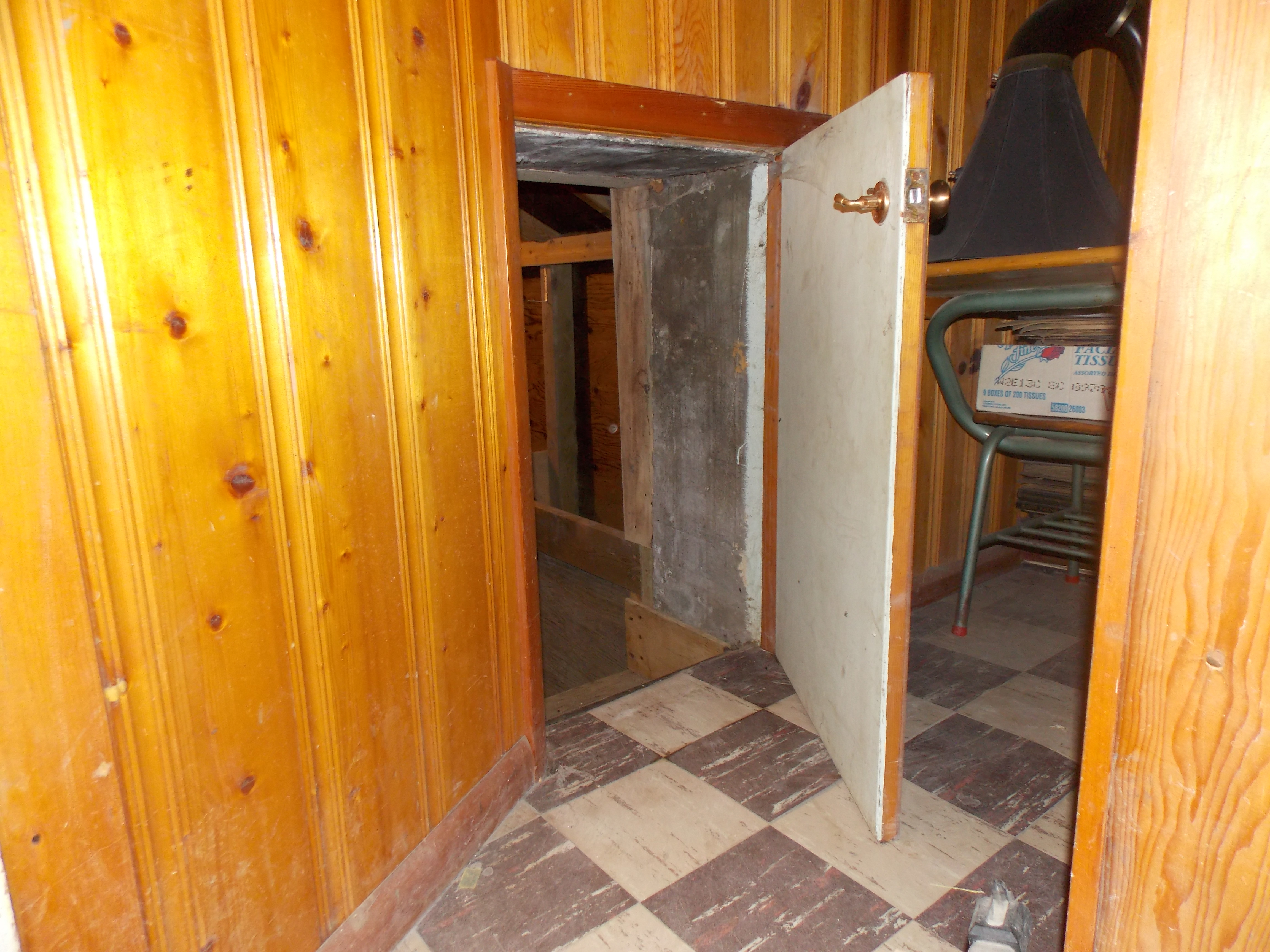
DSCN5020A small Elf-sized door at the end of our rumpus room led to The Pit, our root cellar, which was stocked with a year’s supply of potatoes, carrots, and onions. Back then there were dirt walls supported by wooden beams, and there was a capped circular passage on the sidewalk below the living room window where the produce was lowered down each fall. Mom’s garden was a full acre. We grew enough potatoes not only to last our family the full year, but also to supply many meals to extended family and friends who helped with the planting, hilling, rototilling, and weeding. I spent many less-than-idyllic hours and raised many blisters in Mom’s garden. In the fall we’d dig those rows and rows and rows of potatoes and gather them up in burlap sacks which were hauled to the side of the house and lowered through the passage into The Pit, where they were poured out, russets separate from red and Yukon gold, into the bins.

DSCN5022The Pit also served recreational purposes. The child-sized door that made you stoop to enter and the cave-like architecture made it a natural setting for fantasy. Sometimes we’d shimmy up or down the passage as a secret way of entering or leaving the house.

DSCN5023And, when needed, it was a dark place to hide.